
SDG 12: Responsible Consumption and Production
Tashkent University of Information Technologies named after Muhammad al-Khwarizmi contributes to Sustainable Development Goal 12 by promoting responsible resource use, sustainable campus operations, waste reduction, digital transformation, and environmental awareness across the university community. As a large public ICT-focused institution serving more than 31,000 students across its main campus and regional branches, TUIT recognizes that responsible consumption is not limited to environmental campaigns alone. It also requires efficient management of electricity, water, food, equipment, facilities, digital infrastructure, and daily institutional processes.
During the 2024–2025 academic year, TUIT strengthened its contribution to SDG 12 through food waste reuse practices, LED-based energy efficiency measures, solar energy adoption, campus greening, digitalized administrative and educational processes, and student engagement in environmental responsibility. These activities show how a large university can reduce unnecessary waste, improve operational efficiency, and build a culture of responsible behaviour among students, staff, and the wider community.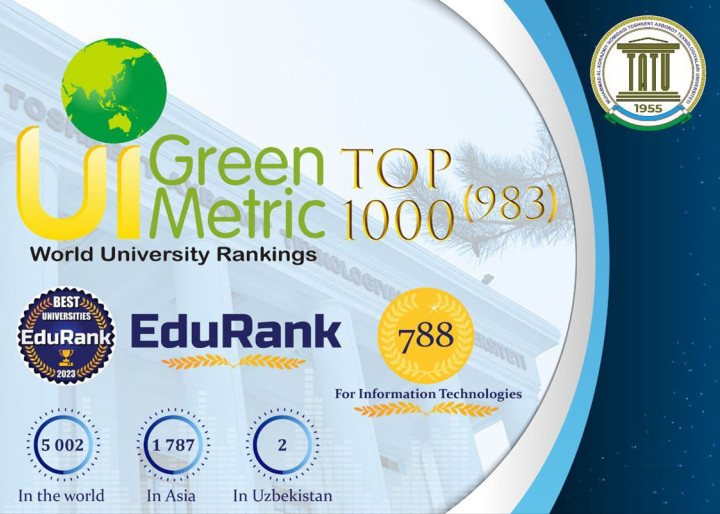
https://tuit.uz/en/ui-green-metric-world-university-ranking-2024
TUIT’s performance in sustainability-related rankings also reflects its growing commitment to responsible institutional management. In 2024, the University was ranked 890th globally in the UI GreenMetric World University Ranking, which evaluates universities across criteria such as infrastructure, energy and climate change, waste, water, transportation, and education/research. In 2025, TUIT was also listed in the Times Higher Education Impact Rankings TOP 1000, further demonstrating that sustainability and responsible institutional practices are becoming part of the University’s development agenda.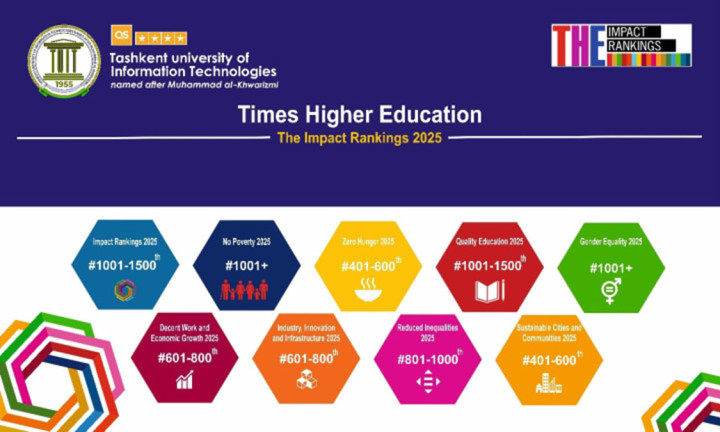
https://tuit.uz/en/the-impact-ranking-2025
Research & Innovation
TUIT’s Scopus-indexed research portfolio includes 2 articles classified under SDG 12, representing 0.1% of the University’s total SDG-related Scopus output. Although the direct number of SDG 12-classified publications is small, the University’s broader research strengths in engineering, automation, smart systems, digital management, energy efficiency, and applied technologies are relevant to responsible consumption and production. These fields can support more efficient industrial processes, smarter resource management, reduced waste, and better monitoring of institutional and production systems.
SDG 12 Responsible Consumpt.pdf
As an ICT university, TUIT contributes to SDG 12 through digital transformation and technology-enabled efficiency. Digital platforms, electronic communication, online learning systems, automated management processes, and paperless administrative practices help reduce reliance on printed documents and improve institutional efficiency. By shifting more academic, administrative, and communication activities into digital formats, the University reduces unnecessary material consumption while improving speed, transparency, and accessibility for students and staff.
 |
 |
https://tuit.uz/energy-conservation-program
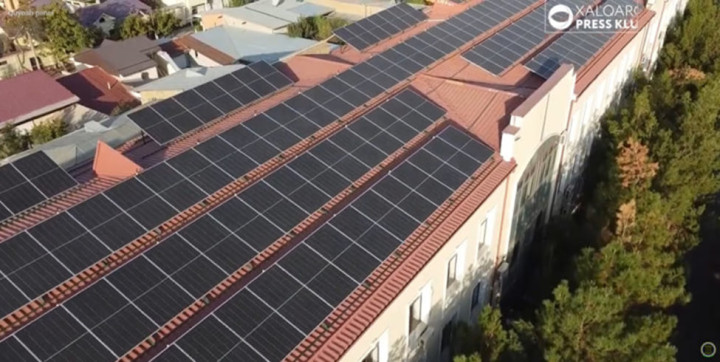
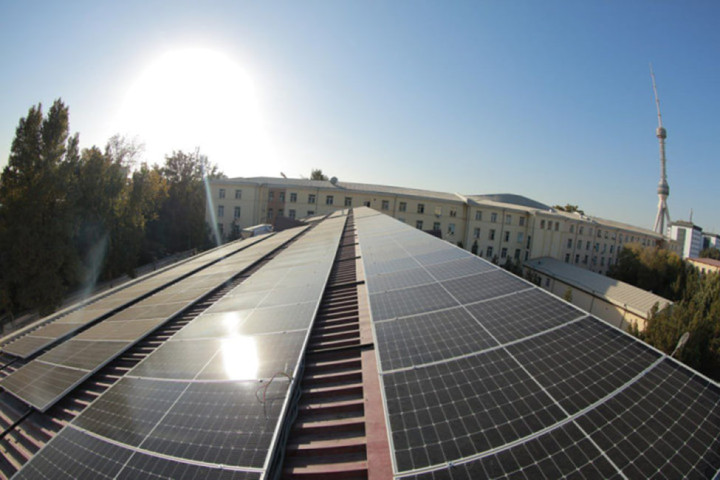
TUIT’s sustainability-related innovation is also connected to energy and smart infrastructure. Solar panel systems and LED lighting implementation demonstrate practical steps toward reducing resource waste and improving campus efficiency. These measures are not only relevant to SDG 7 and SDG 13, but also directly connected to SDG 12 because responsible consumption requires using fewer resources to achieve the same or better institutional outcomes. Efficient lighting, renewable energy adoption, and smarter utility management reduce operational waste and contribute to more sustainable campus development.
 |
 |
 |
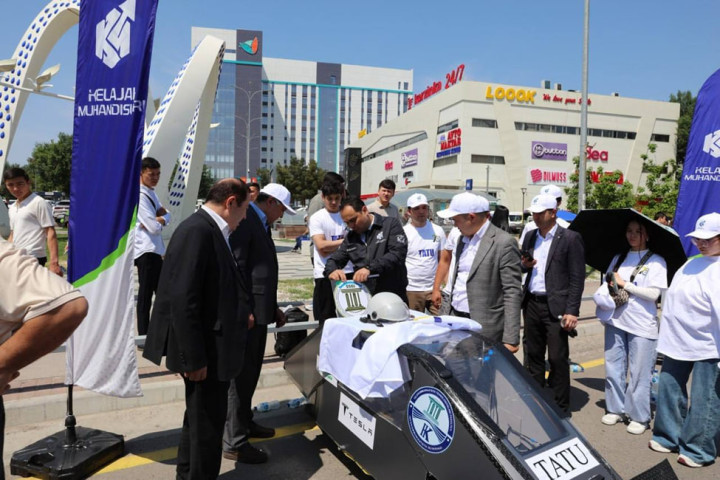
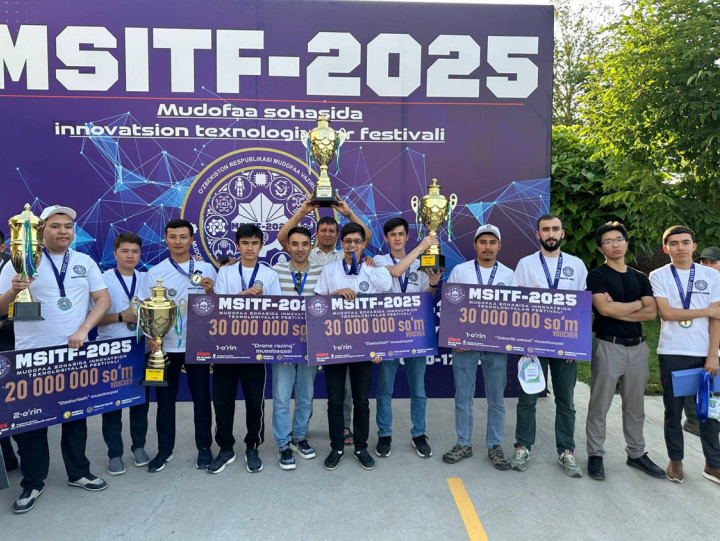
Student innovation also supports the SDG 12 agenda. The “Kelajak texnologiyalari” innovation exhibition, held in March 2025, provided a platform for students to present applied technology projects, including green technology and sustainability-related ideas. Such activities are important because responsible production depends on future engineers, managers, and ICT specialists who understand efficiency, environmental responsibility, and practical innovation. Through these platforms, TUIT encourages students to think about how technology can be used to reduce waste, optimize resources, and solve sustainability challenges.
Education & Students
TUIT contributes to responsible consumption through education, awareness-building, and student participation in sustainable campus life. Students are exposed to disciplines and practices connected with engineering efficiency, automation, digital management, resource monitoring, environmental awareness, and responsible use of shared facilities. These areas help students understand that sustainability is not only a policy issue, but also a practical responsibility in laboratories, classrooms, dormitories, offices, and public spaces.
 |
 |
Yosh ixtirochidan suvni tejash yechimi
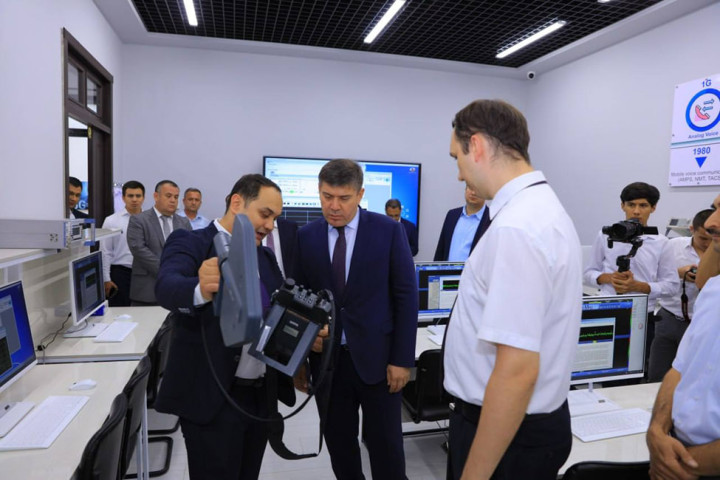
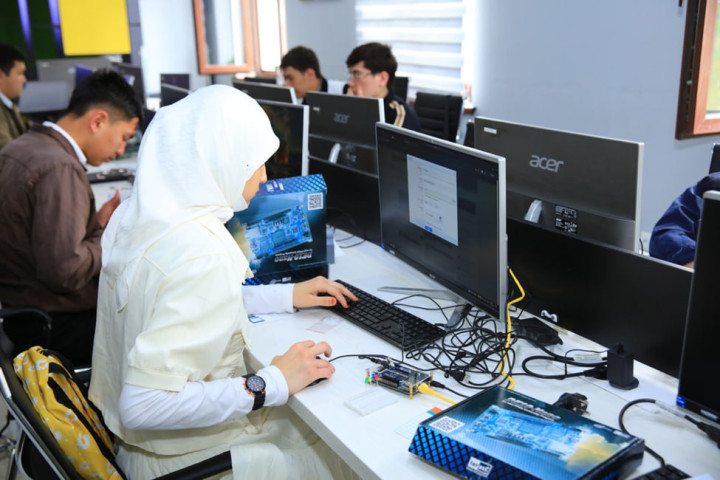
The University encourages students and staff to use electricity, water, equipment, and shared infrastructure responsibly. In a technology university, this is especially important because laboratories, computers, servers, classroom devices, and digital systems require careful management. Responsible use, maintenance, repair, and lifecycle management of these assets help reduce premature replacement, unnecessary costs, and material waste. By promoting equipment stewardship, TUIT supports a more sustainable approach to institutional consumption.
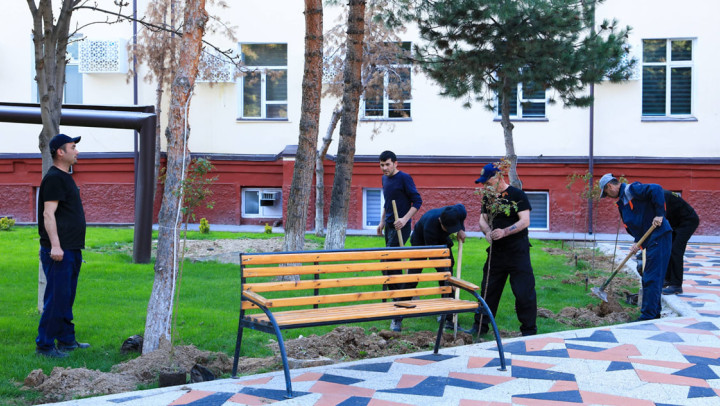
Environmental awareness is also developed through student participation in campus and community initiatives. The “Yashil Makon” Green Space campaign engages students in tree planting and campus greening activities, helping build ecological consciousness and responsibility toward the physical environment. During the reporting period, TUIT planted more than 600 ornamental and fruit trees in Yunusobod district and campus areas. These activities strengthen students’ understanding of sustainability as a shared community responsibility.
Yashil Makon national initiative — TUIT
The student public group “QALQON” also contributes to responsible campus behaviour by promoting environmental order in dormitories, campus zones, and surrounding areas. Such student-led participation is important because responsible consumption depends not only on infrastructure, but also on daily habits. Cleanliness, waste discipline, electricity conservation, shared space care, and respect for university property all contribute to a more sustainable campus culture.
TUIT’s first-ever graduates in Artificial Intelligence and Mechatronics, produced in May 2025, also reflect the University’s role in preparing specialists for smarter and more efficient production systems. AI, automation, robotics, and mechatronics are increasingly relevant to responsible industrial production because they can help optimize processes, reduce waste, improve quality control, and support data-driven decision-making. Through these fields, TUIT contributes to the future workforce needed for more sustainable production and resource management.
Community & Partnerships
One of the strongest practical examples of TUIT’s SDG 12 contribution is food waste management. According to the University’s sustainability materials, food waste from the main campus cafeteria is separated and collected weekly in cooperation with a local service partner, Taste Point. The collected food waste is then redirected to Oqtosh village, located approximately 100 kilometres from Tashkent, where it is reused as animal feed for local livestock farmers. From January to December 2024, the reported average amount of food waste collected was 1,108 kilograms per month, which equals approximately 13,296 kilograms annually. This circular approach reduces landfill waste and transforms unused food resources into productive agricultural value.
This food waste reuse system is relevant to both responsible consumption and community partnership. Instead of treating cafeteria waste as a disposal problem, the University’s approach connects campus operations with local agricultural use. This helps reduce environmental pressure, supports rural livestock activity, and demonstrates how institutional waste can be redirected into a useful resource. However, because the current evidence file marks the Taste Point and Oqtosh village details as requiring an official source, this initiative should be supported with additional internal documentation, photos, agreements, or verified reports before final submission.
 |
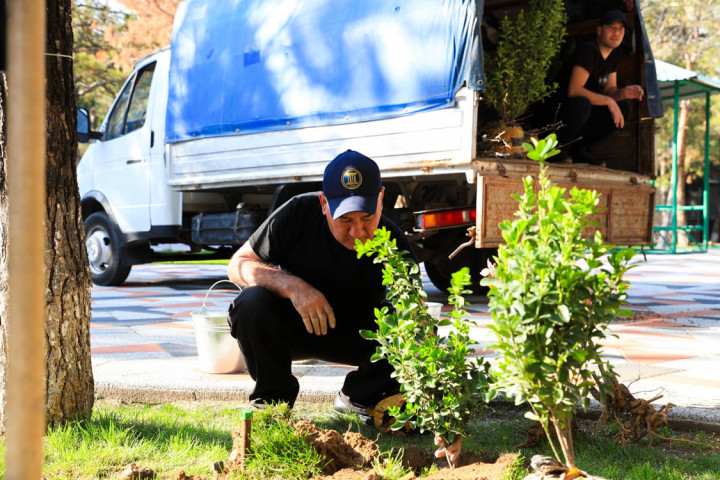 |
TUIT’s participation in the national “Yashil Makon” initiative also supports responsible campus and community development. By planting more than 600 trees, the University contributes to greener public spaces, improves the campus environment, and supports Uzbekistan’s wider national greening agenda. This activity is relevant to SDG 12 because responsible institutions are expected not only to reduce waste, but also to restore and protect the environment in which they operate.
 |
 |
 |
https://t.me/tuituz_official/21530
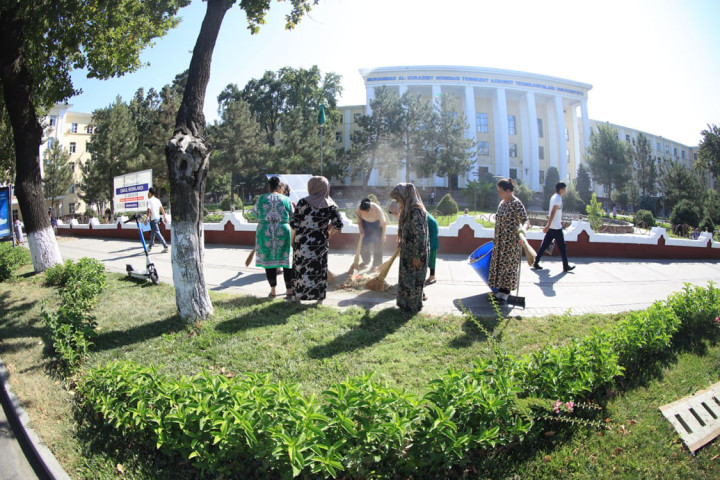
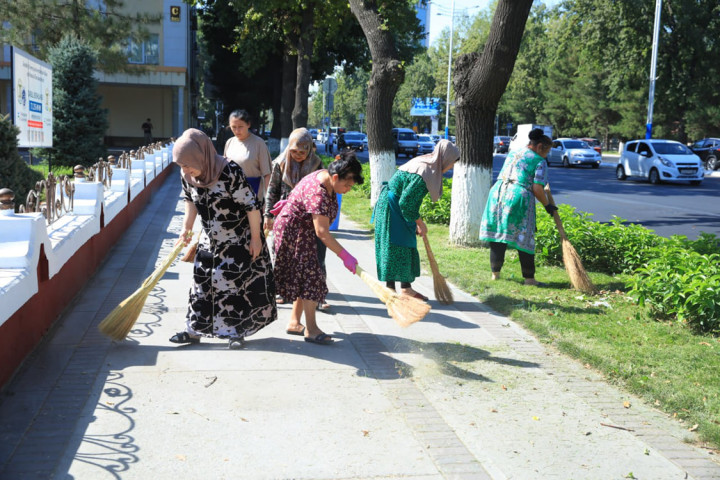
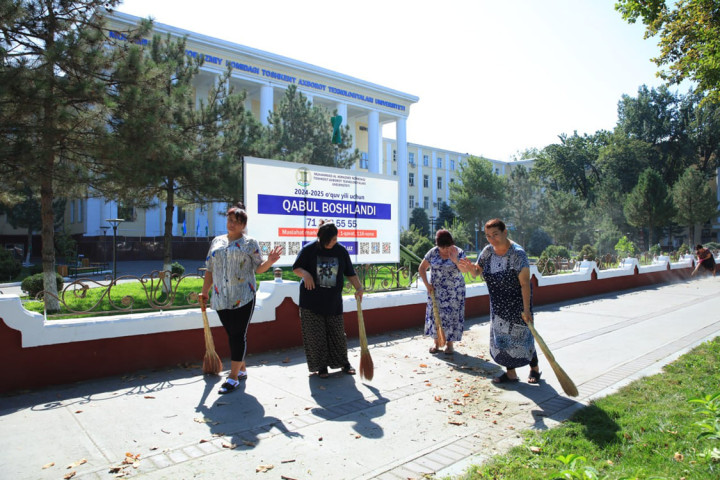
The University also participated in the national “Mahalla obod — yurt obod” community cleanup initiative in August 2024. Through this activity, TUIT students and staff contributed to public cleanliness and community improvement. Such initiatives strengthen civic responsibility and demonstrate that sustainable consumption includes maintaining clean public spaces, reducing unmanaged waste, and encouraging collective care for the local environment.
TUIT branches planting trees under Yashil Makon
TUIT’s engagement with sustainability-related external platforms further strengthens its SDG 12 contribution. Eco Expo Central Asia 2025 invited TUIT startups to participate in a green startup exhibition, with opportunities for individual pavilions and potential participation in a Japan green technology showcase for top performers. This kind of partnership connects student innovation with the wider green economy and encourages practical solutions in sustainability, responsible production, and environmental technology.
The University’s recognition in the UI GreenMetric World University Ranking 2024 and THE Impact Rankings 2025 also supports the SDG 12 narrative. UI GreenMetric evaluates universities across sustainability-related criteria including infrastructure, energy, waste, water, transportation, and education/research. TUIT’s 890th global position shows that the University is participating in international sustainability benchmarking and working to improve responsible institutional practices. Its inclusion in the THE Impact Rankings 2025 TOP 1000 further confirms that sustainable development has become part of the University’s institutional visibility and strategic direction.
UI GreenMetric 2024 official announcement
THE Impact Rankings 2025 — TUIT
Key Results
|
Indicator |
Result |
|
Scopus articles (SDG 12) |
2 (0.1% of total) |
|
Monthly food waste collected and reused |
1,108 kg average |
|
Food waste destination |
Oqtosh village (animal feed) |
|
UI GreenMetric Ranking 2024 |
890th globally |
|
THE Impact Ranking 2025 |
TOP 1000 |
|
Trees planted (Yashil Makon) |
600+ |
|
LED lighting implementation |
Campus-wide |
|
Solar panel systems |
Installed |
Overall, during the 2024–2025 academic year, TUIT contributed to SDG 12 through food waste reuse, digitalization of administrative and educational processes, energy efficiency measures, solar energy adoption, campus greening, student environmental engagement, equipment stewardship, and community cleanup activities. These efforts show that the University approaches responsible consumption and production as a combination of infrastructure, behaviour, education, innovation, and institutional management. By improving its own operations and educating students in efficiency-oriented fields, TUIT contributes to a more responsible and sustainable model of university development.