
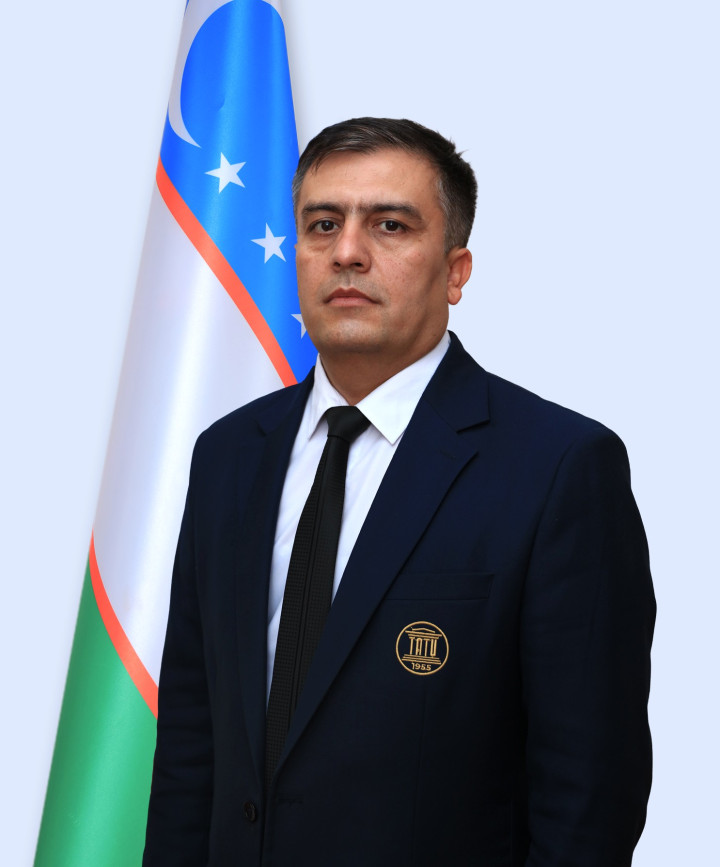
Head of the department:
PhD, Narzulloyev Oybek Mirzayevich
History of the department
The Department of Television and Radio Broadcasting Systems was established on September 3, 2010, as a result of the merger of the Departments of Antenna–Feeder Devices and Television and Radio Broadcasting.
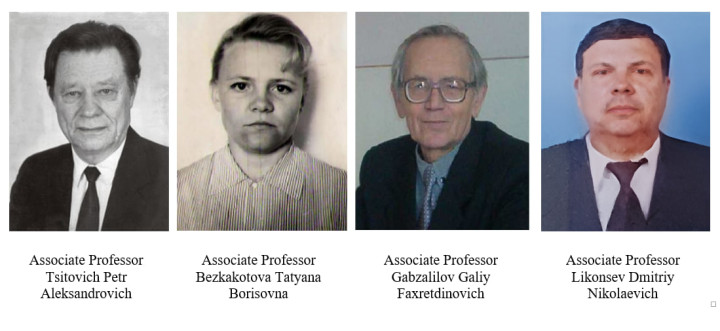
The Department of Antenna–Feeder Devices (formerly Technical Electrodynamics and Antennas) was founded in 1965 within the Faculty of Radio Communication and Radio Broadcasting as a result of the reorganization of the Departments of Fundamentals of Electrical Engineering and Fundamentals of Radio Engineering. Initially, the department began its activities under the leadership of Candidate of Technical Sciences, Associate Professor Nikolay Nikolaevich Likonsev. He made a significant contribution to establishing educational and technical laboratories in electrodynamics and antenna–feeder devices, as well as to publishing teaching and methodological materials. Subsequently, the department was headed by the following scholars:
- From 1967 to 1979 — Honored Scientist of Uzbekistan, Candidate of Physical and Mathematical Sciences, Associate Professor Petr Aleksandrovich Tsitovich;
- From 1979 to 1989 — Candidate of Technical Sciences, Associate Professor Tatyana Borisovna Bezkakotova;
- From 1988 to 2003 — Candidate of Technical Sciences, Associate Professor Galiy Fakhretdinovich Gabzalilov;
- From 2003 to 2010 — Candidate of Technical Sciences, Associate Professor Dmitriy Nikolaevich Likonsev.
During this period, the department’s academic staff included Candidate of Technical Sciences, Associate Professor Svetlana Pavlovna Gan; Candidate of Technical Sciences, Associate Professor Galina Sergeevna Serova; Candidate of Technical Sciences Evgeniy Vitalevich Solovev; as well as lecturers Aleksandr Borisovich Smirnov, Zoya Edmundovna Rusinkevich, and Vladimir Abramovich Bitkov.
The Department of Television and Radio Broadcasting was established in 1960 as a specialized department within the Faculty of Radio Communication and Radio Broadcasting.
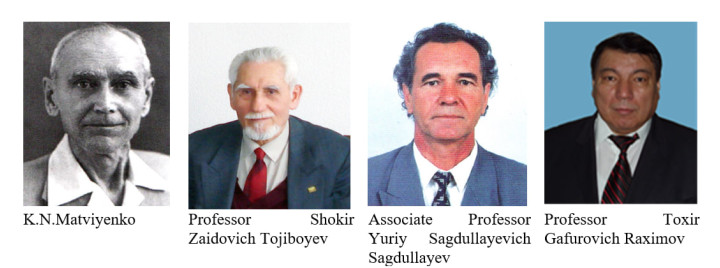
The department was headed by Associate Professor K.N. Matvienko (1960–1964), Candidate of Technical Sciences, Associate Professor Li Sen-San (1964–1969), Senior Lecturer M.N. Vaulin (1969–1970), Honored Radio Operator of Uzbekistan, Associate Professor Sh.Z. Tojiboev (1970–1980, 2002–2009), and Doctor of Technical Sciences, Professor Yu.S. Sagdullaev (1980–2001).
In the last period, Candidate of Technical Sciences, Associate Professor T.G.Rakhimov (2008-2011), Ph.D., Associate Professor V.A.Gubenko (2011-2012), Ph.D., Associate Professor A.A. Yarmukhamedov (2012-2013), Ph.D., Associate Professor Z.T.Khakhimov (2013-2014), Senior Lecturer A.Sh.Shahobiddinov (2013-2014), Ph.D., Associate Professor Kh.S. Soatovlar (2014-2017), Ph.D., Professor B.N. Rakhimov (2017-2019), PhD, Associate Professor Kh.Kh. Nosirov (2019-2020), U.A. Umarov (2020-2022), PhD., A.A. Berdiyev (2022-2025) and PhD., O.M. Narzulloyev (2025-present) were appointed heads of the department.
In 1970, the first research laboratory was established within the department. The laboratory was supervised by Candidate of Technical Sciences, Associate Professor Sh.Z. Tojiboev. Between 1977 and 1982, under the leadership of Associate Professor Sh.Z. Tojiboev, the first experimental prototype of a color television camera based on charge-coupled semiconductor devices was developed. The growing interest in video cameras using charge-coupled devices stimulated extensive scientific research in this field. Collaborative research was carried out with the Space Research Institute under Academician G.A. Sagdullaev; the “Koinot” Design Bureau in Tashkent under Academician Sh.A. Vahidov; the Astronomical Institute of the Academy of Sciences of Uzbekistan under Academicians T.S. Yuldoshev and Sh.A. Egamberdiev; and the Institute of Nuclear Physics under Academician U.G. Gulomov. As a result, the first television microscope and the first color television video camera based on a charge-coupled device matrix were developed. Subsequently, research activities were devoted to the application of digital technology in television systems. In 1982, the first monograph by Sh.Z. Tojiboev, entitled “Application of Charge-Coupled Devices in Television Systems,” was published by the “Fan” Publishing House. This device was presented at the Second International Conference (Yerevan, Armenia) in 1982. In 1984, the experimental prototype of a color microscope based on a CCD matrix participated in an international exhibition and was awarded a silver medal.
In addition, between 1982 and 1985, the laboratory staff developed a television device for remote detection of an object’s structural condition, and between 1988 and 1990, a device for converting low-frame-rate television signals into a standard multi-frame format was created.
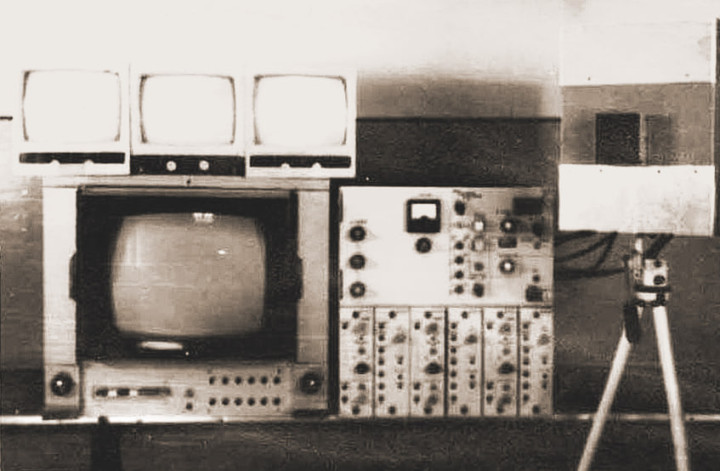
Experimental copy of the first color television camera
In 1981, a second research laboratory was established within the department under the leadership of Associate Professor Yu.S. Sagdullaev. Under the supervision of Academician J.A. Abdullaev and based on an economic contract with the “Energiya” Scientific and Production Association, research was conducted on the development of a television measurement system for the rendezvous and docking of spacecraft.
The developed systems were designated as “AIST-1,” “AIST-2,” “AIST-3,” and “AIST-4,” and were used by the Mission Control Center for the rendezvous and docking of the “Soyuz,” “Progress,” and “Mir” spacecraft.
For this work, Academician J.A. Abdullaev was awarded the “S.P. Korolyov Medal” and the “Y.A. Gagarin” diploma. Yu.S. Sagdullaev defended the results of his research in 1991 as a doctoral dissertation at the Institute for Space Research in Moscow.
Based on the scientific research results achieved at the department, the second monograph by Sh.Z. Tojiboev, entitled “Television Devices Based on Solid-State Photoelectric Converters,” was published in 1996 by the “Fan” Publishing House of the Academy of Sciences of Uzbekistan
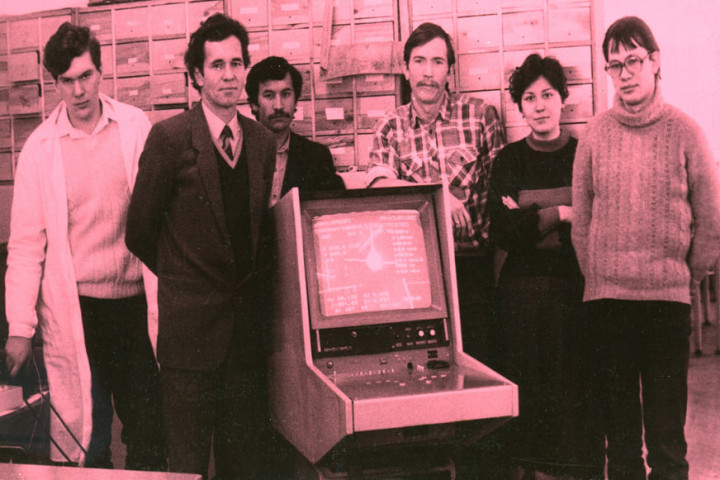
The second research laboratory established under the leadership of Yu.S. Sagdullaev and the project participants.
The monograph entitled “Osnovy Televizionnogo Kontrolya Protsessa Sblizheniya Kosmicheskikh Apparatov” (“Fundamentals of Television Monitoring of the Spacecraft Rendezvous Process”), co-authored by J.A. Abdullaev and Yu.S. Sagdullaev, was published in 1997 by the “Fan” Publishing House of the Academy of Sciences of Uzbekistan. In 2000, it was republished by the institute’s editorial and publishing department under the title “Raspoznavaniya Opticheskikh Izobrazheniy” (“Recognition of Optical Images”).
The successful organization of the department’s activities and educational process was significantly supported in various years by laboratory heads V.N. Vorobyev, T.A. Abidjanov, G. Makarenko, G. Gafurov, V. Klimushkin, F. Gafurov, and A.M. Ovchinnikov. Their initiative and dedicated efforts played an important role in developing the department’s material and technical base and in improving the educational process.
In 2010, the Department of Television and Radio Broadcasting was merged with the Department of Antenna–Feeder Devices and began operating as a unified structure. Since 2013, the department has been known as the Department of Television and Radio Broadcasting Systems.
Between 2013 and 2022, the department was headed by Associate Professor T.G. Rakhimov, Associate Professor V.A. Gubenko, Associate Professor A.A. Yarmukhamedov, Associate Professor Z.T. Khakimov, A.Sh. Shakhobiddinov, Associate Professor X.S. Soatov, Associate Professor B.N. Rakhimov, and Associate Professor X.X. Nosirov. From 2022 to 2025, the department was headed by PhD A.A. Berdiyev.
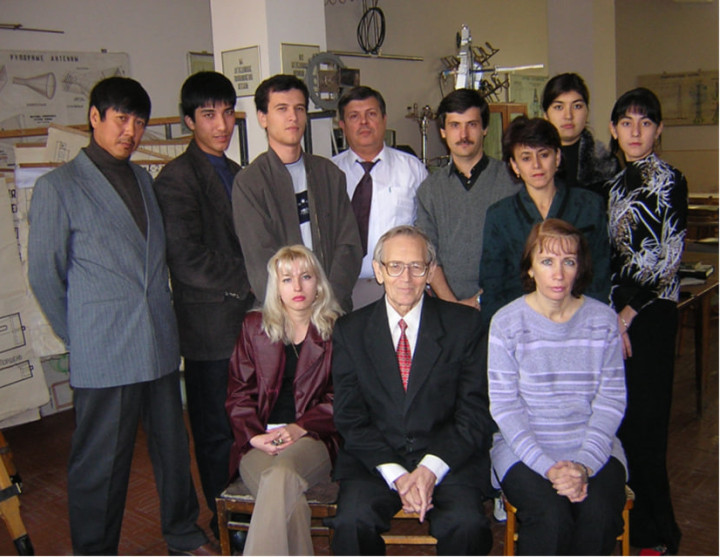
The staff of the Department of Antenna–Feeder Devices (2004).
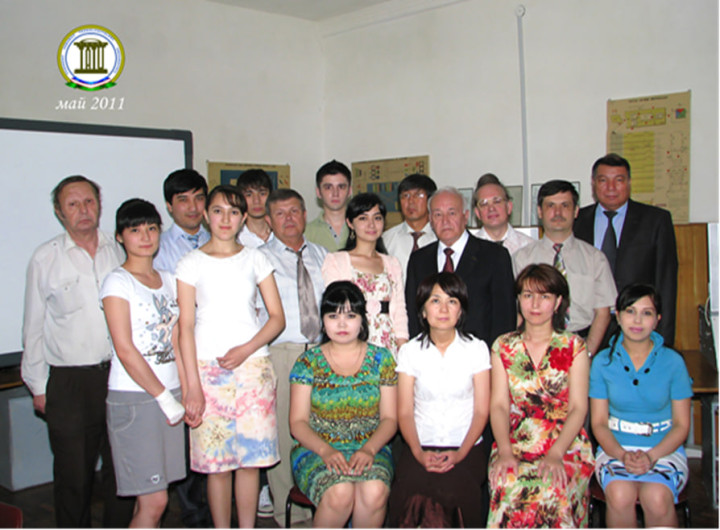
the staff of the Department of Television and Radio Broadcasting (2011).
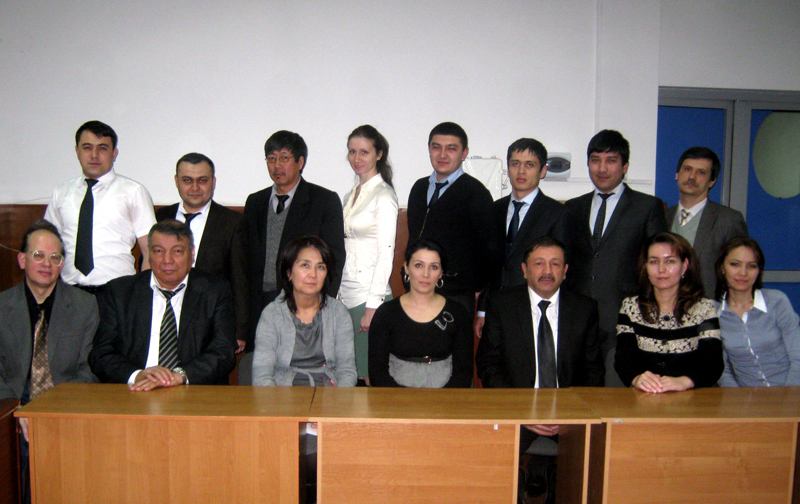
The staff of the Department of Television and Radio Broadcasting Systems (2016).
Within the department, the following laboratories are currently operating: Digital Television Systems, Electromagnetic Fields and Waves, Antenna–Feeder Devices, Antenna Technologies, and Modern Radio Broadcasting, Radio Communication and Television Devices.
Throughout these years, the department’s material and technical base has been gradually modernized. Classrooms have been equipped with modern multimedia tools, a digital television laboratory stand has been installed, and computer-equipped classrooms have been established. Cooperation with communication and telecommunications enterprises has been strengthened, and the academic staff has been enriched with young and promising specialists.
In recent years, the department’s scientific potential has been further strengthened, with particular attention given to supporting young researchers and developing the scientific school. A number of researchers have successfully obtained the PhD degree as well as the Doctor of Technical Sciences (DSc) degree. This demonstrates the formation of a stable scientific environment and a continuous scientific school within the department.
During this period, a modern Digital Television and Radio Broadcasting Systems laboratory was established. This laboratory enables real-condition transmission and reception of digital television and radio broadcasting signals, signal processing, compression, and quality analysis, thereby enhancing the effectiveness of both educational and research activities.
International cooperation has been expanded, establishing partnerships with higher education and research institutions in the Republic of Korea, Austria, the United States of America, and Slovakia. As a result, master’s and doctoral students have participated in international exchange programs and gained access to foreign experience.
Modern science and technology, including digital broadcasting standards, multimedia systems, digital signal processing, and advanced transmission technologies, have been gradually integrated into the educational process. Based on the integration of education, science, and practice, the department continues to develop consistently in training competitive specialists.
Today, the Department of Television and Radio Broadcasting Systems possesses strong scientific, pedagogical, and innovative potential and prepares highly qualified specialists in the fields of television, radio communication, digital broadcasting, electromagnetic fields, antenna systems, and digital signal processing.
For the educational program Wireless Communication and Television and Radio Broadcasting Engineering and the specialty Television, Radio Communication and Radio Broadcasting Systems and Devices assigned to the department, industrial and pre-graduation internships are organized annually for approximately 100 bachelor’s students and about 12 master’s students. Under the supervision of faculty members, around 150 bachelor’s graduation qualification works and approximately 30 master’s theses are defended each year.
The current development of the department is the result of the effective work of all former heads, professors, lecturers, and staff members who have contributed over the years.
Currently, the department possesses strong scientific and academic potential and operates under the leadership of PhD., O.M. Narzullayev. The following faculty members are part of the academic staff:
- Electromagnetic Fields and Waves
- Digital Communication
- Television and Radio Broadcasting
- Fundamentals of Radio Electronics
- Electroacoustics and Radio Broadcasting
- Digital Processing of Video Data
- Image Processing
- Digital Television Systems
- Antenna–Feeder Tracts of Television and Radio Broadcasting Systems
- Interference-Resistant Radio Communication Systems and Electromagnetic Compatibility
- Antennas and Wave Propagation
- Electroacoustics and Radio Broadcasting
- Digital Processing of Video Data
- Antenna–Feeder Devices
- Interference-Resistant Radio Communication Systems
SUBJECTS TEACHED IN MASTER'S DEGREE
- Antenna Systems of Modern Television and Radio Systems
- Applied Television Systems
- Theory of Audio and Video Signal Coding
- Digital processing of video and audio signals
- Volumetric Television Technologies
- Methods and means of radio-electronic protection in information transmission systems
- Design of small-radius data transmission radio systems
Currently, the department has high scientific and scientific-pedagogical potential, and the following teaching staff is working under the leadership of PhD., Narzullayev O.M.:
Main staff
- Narzulloyev Oybek Mirzayevich – PhD, Head of the Department
- Berdiyev Alisher Alikulovich – Associate Professor
- Aripova Umida Khayrullayevna – Associate Professor
- Gavrilov Igor Aleksandrovich – Associate Professor
- Gubenko Vladislav Anatolevich – Associate Professor
- Akhmedova Anora Khalbayevna – Senior Lecturer
- Mukhamedova Diyorabegim Bakhtiyor kizi – PhD, Senior Lecturer
- Alimukhamedova Madina Erkin kizi – Assistant
- Norov Elnur Islomovich – Assistant
- Tashmetov Shakhzod Erkin ugli – Assistant
- Ibragimov Doniyor Bakhtiyarovich – Assistant
- Zokhidov Abdurashid Zokir ugli – Assistant
Co-workers
- Shakhobiddinov Alisher Shopatkhiddinovich – Associate Professor
- Rahimov Bakhtiyor Nematovich – Professor
- Nosirov Khabibullo Khikmatullo ugli – Professor
- Badalov Jasur Ismailovich – Acting Associate Professor
- Gaziyev Khushnud Gaybullaevich – Assistant
- Kan Vitaliy Sergeevich – Senior Lecturer
Support staff
- Nazarova Fotima Khabibullayevna – Head of Laboratory
- Kan Vitaliy Sergeevich – Engineer
- Tukhtayeva Aziza Bakhtiyor qizi –Laboratory Assistant Engineer
SCIENTIFIC AND SCIENTIFIC AND METHODOLOGICAL WORKS, CONDUCTED AT THE DEPARTMENT
At present, a number of актуal scientific researches and problem-oriented scientific projects are being carried out at the department, including:
“Development of a video codec based on wavelet transformation with inter-frame image processing for mobile communication systems”,
“Development of methods for calculating radio wave attenuation in tunnels”,
“Development of an operating model of a radio-technical anechoic chamber”,
“Modernization of the scientific and practical AFU laboratory”,
“Development of technology for joint installation of antennas of different operators on a single support”,
“Development of methods for evaluating the quality of service and reliable reception zones using radio monitoring stations”,
“Development and creation of a measuring stand for testing the operability of fiber-optic communication lines under environmental impact”,
“Development of software for a television codec for IP television and mobile communications”.
Based on grants from foreign research centers and orders from international scientific foundations, projects such as INTRAS, DECIDE, SPACECOM, and IABS (ERASMUS) are being implemented. Within the framework of these projects, an academic exchange program with the University of Klagenfurt (Austria) has been established at the department.
At the “Innovation Ideas and Projects Fair – 2015”, traditionally organized by the initiative of the Ministry for the Development of Information Technologies and Communications of the Republic of Uzbekistan, the department represented the Tashkent University of Information Technologies with the project “Antennas for Television, Radio Broadcasting and Communication Systems” developed in the “Antenna-Feeder Devices” laboratory. Currently, work on the implementation of this project is being carried out in cooperation with “Uzbektelecom” JSC and “UzDigital TV”.
In the first semester of the 2014–2015 academic year, the “IP-TV” laboratory was launched in the department’s Digital Television classroom.
In order to further improve the training system for bachelor’s and master’s students, the department developed the project “Educational and Practical Laboratory on Antenna-Feeder Devices”, which is financed by the Information and Communication Technologies Development Fund of the Ministry. In the future, students will gain practical skills in working with antenna-feeder devices of wireless telecommunication systems, as well as studying the use and adjustment methods of antennas used in satellite and terrestrial digital television broadcasting systems.
The educational and methodological base of the “Television and Radio Broadcasting Systems” department is also being enriched every year with textbooks and teaching materials published by the faculty members.
In particular, the textbook “Television” written in Uzbek by PhD, Associate Professor Sh.Z. Tajiboev, as well as teaching materials such as “Image Restoration Device”, “Image Restoration Structure”, and “Dictionary of Modern Telecommunication Terms” have been developed.
Over the past decades, Associate Professor M.Z. Zuparov has prepared and published a number of textbooks, teaching manuals, and lecture materials in Uzbek and Russian for courses on electroacoustics and radio broadcasting. In collaboration with Professor G.P. Katunin of the Novosibirsk Academy of Telecommunications and Informatics (Russia), a teaching manual on electroacoustics in Russian and Uzbek, as well as a Russian-Uzbek dictionary on electroacoustics, was created. In memory of PhD, Associate Professor M.Z. Zuparov, the textbook “Electroacoustics and Architectural Acoustics”, written in Latin script, was published in 2014.
In 2015, the textbooks “Radiotechnical Systems” authored by PhD, Professor A.A. Abduazizov and PhD, Professor T.G. Rakhimov, as well as “Propagation of Radio Waves and Antenna-Feeder Devices” written jointly by PhD, Associate Professor D.N. Likonsev and Senior Lecturer A.Sh. Shaxobiddinov, were published.
In 2016, under the editorship of Associate Professor X.S. Soatov, the textbook “Digital Television” authored by I.A. Gavrilov, T.G. Rakhimov, A.N. Puziy, X.X. Nosirov, and Sh.M. Kadirov was published in three versions (Russian, Uzbek Latin, and Uzbek Cyrillic).
Faculty members of the department including A.Sh. Shaxobiddinov, U.X. Aripova, U.A. Umarov, A.N. Puziy, and X.X. Nosirov are currently continuing their doctoral research work.
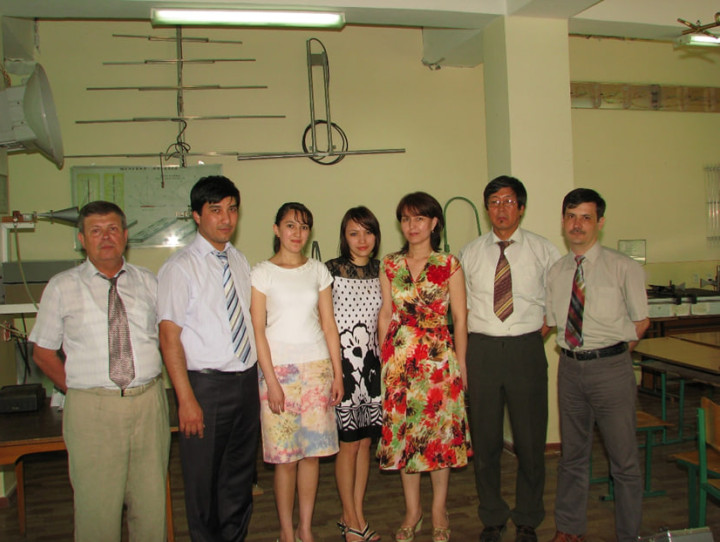
Antenna–Feeder Devices Laboratory and Faculty Members
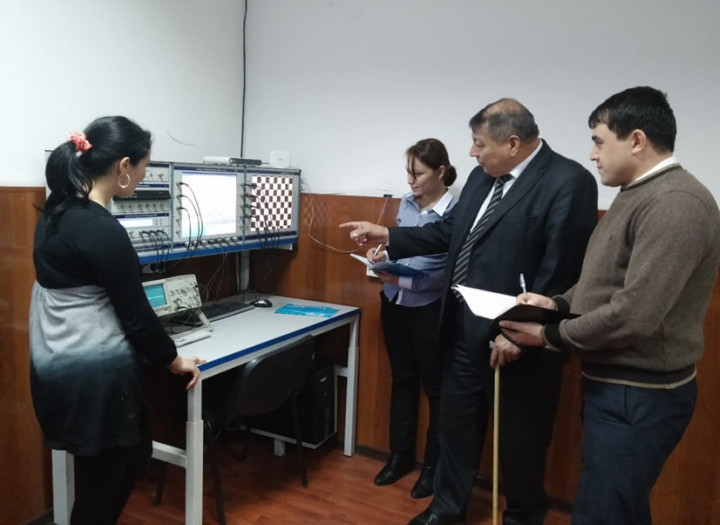
Digital Television Laboratory (Professor T.G. Rahimov with his students)
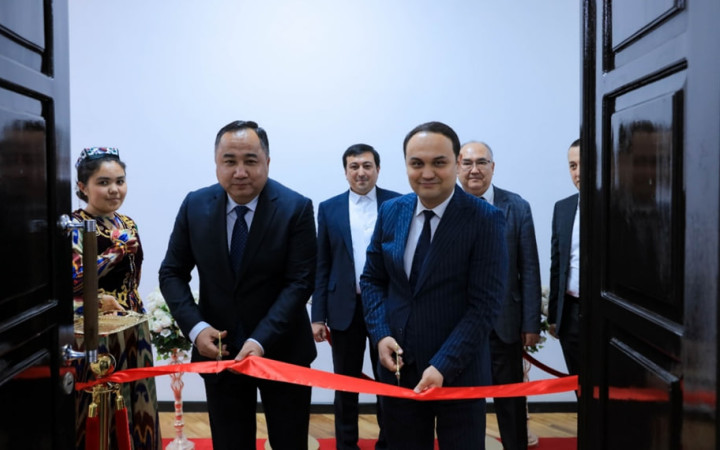
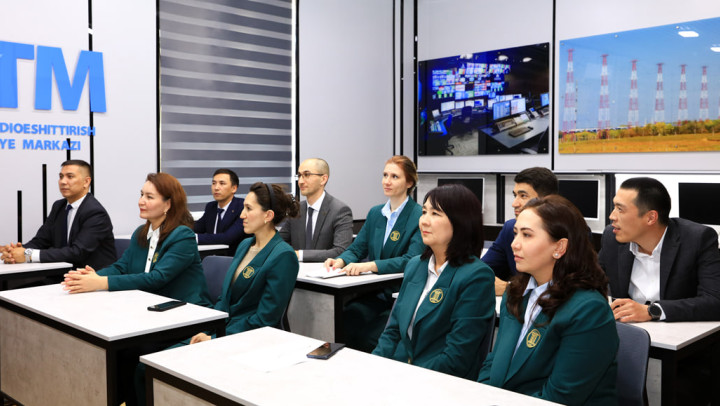
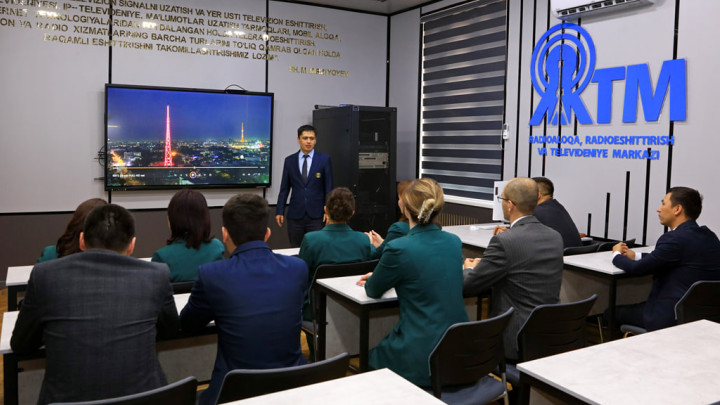
Opening Ceremony of the Scientific and Technical Laboratory Established by the “Radio Communication, Radio Broadcasting and Television Center”
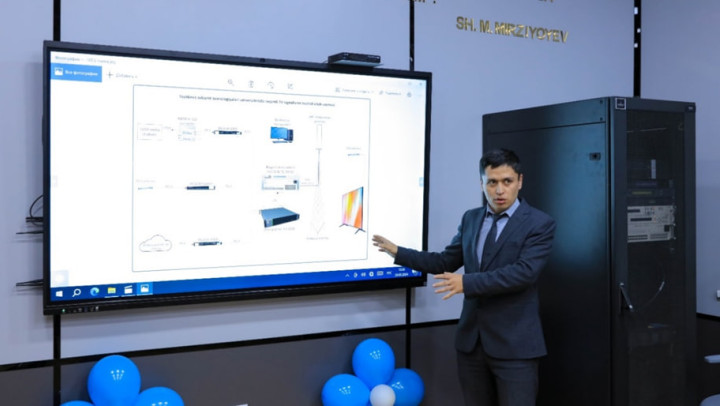
Scientific and Technical Laboratory Established by the “Radio Communication, Radio Broadcasting and Television Center
Scientific Seminar with Faculty Members
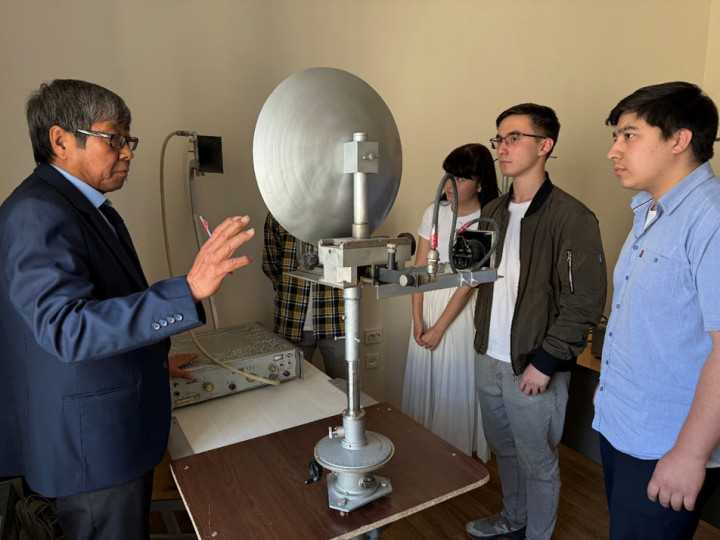
“Young Radio Engineer” Club (Instructor: Vitaliy Sergeevich Kan)
Achieved Results
The department regularly conducts a number of relevant scientific studies and problem-oriented research projects. Among them are the following research works: “Development of a Video Codec for Transmitting Digital Images over Communication Channels,” “Analysis of the Field Distribution of Digital Television Signals in Uzbekistan,” and “Prospects for the Use of the 470–862 MHz Radio Frequency Band for Digital Terrestrial Broadcasting Services in the Republic of Uzbekistan.”
Within the framework of these research activities, the project “Development of Transmitting and Measuring Antennas for Television Signals” (2011–2013) was successfully completed.
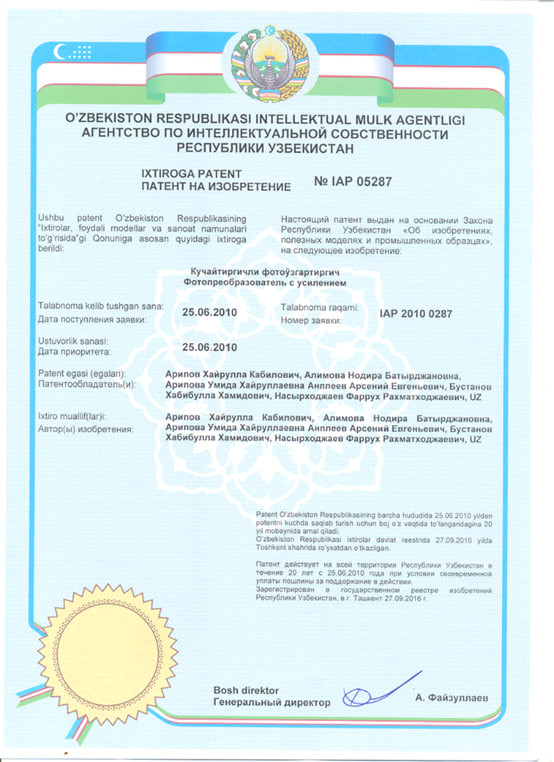
In 2010, Senior Lecturer U.X. Aripova was awarded a patent (No. IAP 2010 0287) by the Intellectual Property Agency of the Republic of Uzbekistan for the invention entitled “Amplified Photoelectric Converter.”
The research project entitled “Investigation of Discrete Radiating Systems for Mobile Communication and Digital Television” (2014–2015) was reviewed and approved by the Scientific and Technical Council.
Between 2011 and 2015, under the leadership of Associate Professor X.S. Soatov, the department prepared a prospective scientific and technical plan entitled “Development of Methods and Tools for Solving Linear and Nonlinear Multidimensional Optimization Problems Based on the Constructive Method of R-Functions.” During the same period, under the leadership of I.A. Gavrilov, another research plan was developed: “Development of Methods, Algorithms, and Devices for Compressing High-Definition TV Video and Audio Signals for Narrowband Mobile and Internet Television Systems Based on Orthogonal, Fractal, and Neural Network Technologies.”
In the 2014–2015 academic year, under the leadership of the Head of the Department, X.S. Soatov, an IP-TV system was launched in the Digital Television laboratory. In addition, the project “Antenna Technologies Educational and Practical Laboratory,” aimed at improving the training system for bachelor’s and master’s students, won a competition announced by the Fund for the Development of Information and Communication Technologies. Currently, students gain practical skills in working with antenna–feeder devices of wireless telecommunication systems, as well as in operating and adjusting satellite and terrestrial digital broadcasting antennas.
In April of the 2023–2024 academic year, in order to strengthen cooperation between education and industry and to create favorable conditions for students, a Scientific and Technical Laboratory was established within the department by the “Radio Communication, Radio Broadcasting and Television Center” State Unitary Enterprise. One of the key components of this laboratory is a technical complex based on the modern DVB-T2 standard, which enables low-power transmission of digital television signals within a limited coverage area and their real-time reception using appropriate receiving equipment. This allows students to configure and evaluate the parameters of modern devices such as encoders, digital transmitters, and multiplexers, and to assess in real time how these settings affect signal quality.
The department’s scientific, technical, and educational base has been continuously enriched. In particular, in 2014, Associate Professor M. Zuparov published the textbook “Electroacoustics and Architectural Acoustics” (in Latin and Cyrillic scripts). In 2015, Associate Professors A.A. Abduazizov and T.G. Rakhimov co-authored Part II of the textbook “Radio Engineering Systems.” In 2015–2016, under the general editorship of Associate Professor X.S. Soatov, the textbook “Digital Television” was published (in Uzbek and Russian). Between 2019 and 2024, Associate Professor U.X. Aripova published the teaching manuals “Fundamentals of Antennas” and “Antennas and Radio Broadcasting.”
Between 2016 and 2024, faculty members X.X. Nosirov, U.X. Aripova, A.Sh. Shakhobiddinov, A.N. Puziy, A.A. Berdiyev, and A.T. Babajanova successfully defended their PhD dissertations and were awarded the Doctor of Philosophy (PhD) degree.
In 2016, B.N. Rakhimov, and in 2024, X.X. Nosirov successfully defended their doctoral dissertations and were awarded the Doctor of Technical Sciences (DSc) degree.
Currently, the department’s doctoral researchers — X.G. Gaziev, E.I. Norov, J.D. Khudoyberganov, Sh.E. Toshmetov, D.B. Ibragimov, S.K. Kengesbaev — as well as independent researcher A.X. Ahmedova, are continuing their scientific research activities.
Research Activities with Talented Students. The faculty members of the Department of Television and Radio Broadcasting Systems are assigned as academic supervisors to approximately ten talented students each academic year.
Over the years, Associate Professors Sh.Z. Tojiboev, V.S. Mirakhmedov, I.A. Gavrilov, M.Z. Zuparov, E.B. Makhmudov, T.G. Rakhimov, D.N. Likonsev, V.A. Gubenko, as well as Professors B.N. Rakhimov and X.X. Nosirov have supervised many talented students in their scientific research activities.
As a result of this mentorship, numerous young specialists have emerged from among these talented students, many of whom have been awarded prestigious state scholarships and have been recognized by industry enterprises. In particular:
- In 2011, under the supervision of Associate Professor I.A. Gavrilov, Master’s student X.X. Nosirov was awarded the Presidential Scholarship of the Republic of Uzbekistan;
- In 2012, talented student X.R. Davletova, and in 2013, D.B. Bobobekova, were awarded the Beruni State Scholarship;
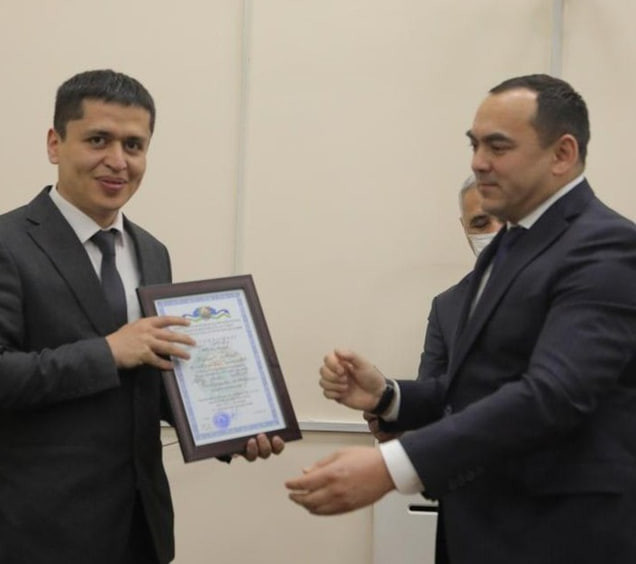
- According to Resolution No. 1/1 of the Board of the Ministry of Higher and Secondary Specialized Education of the Republic of Uzbekistan dated January 22, 2021, Alisher Aliqulovich Berdiyev, a doctoral student, was awarded the Presidential Scholarship of the Republic of Uzbekistan in the field of Natural Sciences, Information Technologies, and Management;
- In 2022, the department’s master’s student M. Rixsiboyev was awarded the Presidential Scholarship of the Republic of Uzbekistan.
State and Industry Awards. In 2008, Associate Professor V.A. Gubenko was awarded the “Master of His Profession” badge by the Agency for Communication and Informatization of the Republic of Uzbekistan.
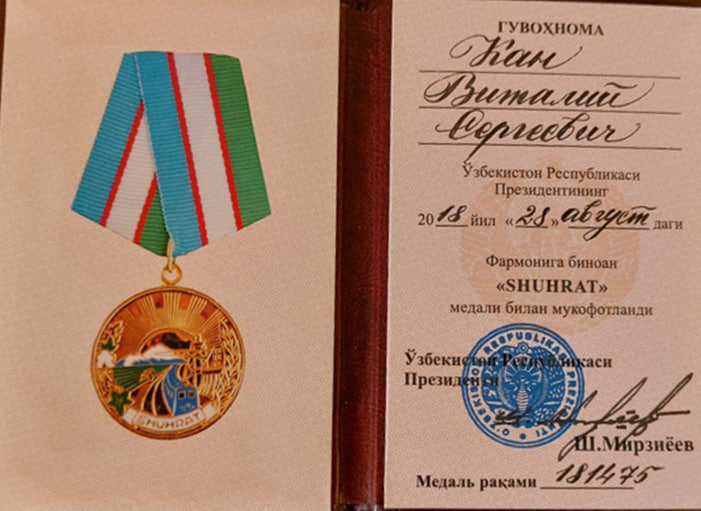
In 2018, Senior Lecturer V.S. Kan was awarded the “Shuhrat” Medal in accordance with the Decree of the President of the Republic of Uzbekistan.
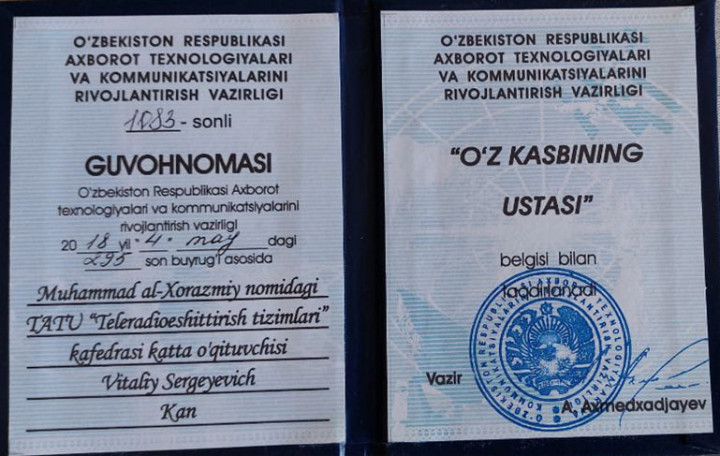
In 2018, Senior Lecturer V.S. Kan was awarded the “Master of His Profession” badge by the Agency for Communication and Informatization of the Republic of Uzbekistan.
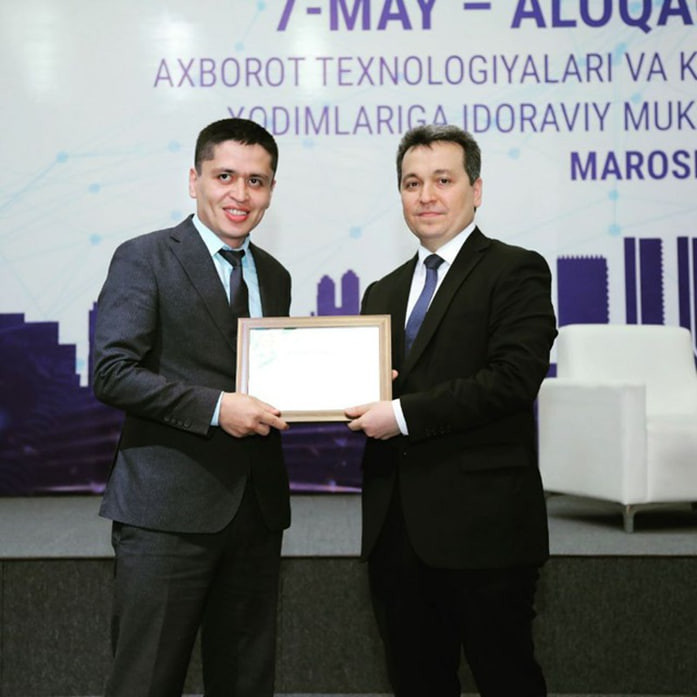
In 2022, Senior Lecturer A.A. Berdiyev was awarded an Honorary Certificate by the Minister for the Development of Information Technologies and Communications of the Republic of Uzbekistan.
International Cooperation.
Today, the department actively develops international cooperation with leading higher education institutions in the United States, Germany, Italy, Poland, Slovakia, Portugal, Lithuania, Belarus, China, the Republic of Korea, and Austria. Stable partnerships have been established with universities in these countries in the areas of academic exchange, internships, joint research, and grant projects.
In particular, close scientific and academic cooperation has been established with the University of Klagenfurt (Austria). Since 2021, a 1+1 joint master’s degree program has been successfully implemented. Within this program, master’s students complete one year of study at Tashkent University of Information Technologies and the second year at the University of Klagenfurt, receiving a double degree upon completion. To date, 16 master’s students have successfully completed their studies under this program.
Within the framework of the European Union’s Erasmus+ program, the department achieved significant results through the SPACECOM (Space Systems and Communications Engineering) project. Implemented during 2019–2023, this project was the first grant-based CBHE (Capacity Building in Higher Education) initiative managed by higher education institutions of Uzbekistan and was coordinated by Tashkent University of Information Technologies named after Muhammad al-Khwarizmi. The project was led by DSc, Associate Professor X.X. Nosirov, who was officially recognized as an Erasmus+ expert in Uzbekistan by NEO Uzbekistan, the national Erasmus+ coordination office.
As part of the project, department members participated in professional development programs at leading European universities and engaged in international conferences and seminars for experience exchange. As a result, the department’s scientific capacity was strengthened, international partnerships were expanded, and opportunities were created to provide students with modern knowledge and skills.
The activities carried out within the SPACECOM project significantly enhanced the department’s international reputation and contributed to its prominent position within the higher education system of Uzbekistan.
International Internships and Exchange Programs.
In recent years, the professors and doctoral researchers of the Department of Television and Radio Broadcasting Systems have actively participated in international professional development, internship, and academic exchange programs. These activities have not only enhanced the pedagogical and scientific capacity of the faculty members but have also contributed to introducing foreign experience and innovative approaches into the department’s activities. Department Assistant A.A. Berdiyev participated in a short-term professional development program at Seoul National University of Science and Technology (SeoulTech), Republic of Korea. During this internship, practical skills were gained in digital broadcasting technologies and modern antenna systems.Professor B. Rakhimov and Assistant D. Ibragimov took part in international professional development courses organized at the Belarusian State University of Informatics and Radioelectronics (BSUIR), Republic of Belarus.
2019–2023. Within the framework of the Erasmus+ CBHE SPACECOM (Space Systems and Communication Engineering) project, department members E. Norov, Sh. Tashmetov, A. Puziy, and A. Berdiyev participated in academic and research activities at partner universities in Europe and Central Asia. Faculty members also attended training programs at universities in Austria, Slovakia, France, and Lithuania. Doctoral researcher Mohirjon Alisher o‘g‘li Rixsivoyev was awarded a grant to participate in a five-month exchange program at the University of Košice, Slovakia. Head of the Department A.A. Berdiyev completed a professional development program at Wuhan Institute of Posts and Telecommunications, People’s Republic of China, from July 7 to July 19, 2024. In the same year, from October 1 to November 30, he participated in a two-month international internship at Gachon University, Republic of Korea.
According to University Order No. 61-01 dated January 19, 2024, doctoral researcher M.A. Rixsivoyev received approval to participate in the Harvard College Project for Asian and International Relations international conference held at Harvard University, USA.
Associate Professors Sh. Begmatov and M. Arabboyev, as well as doctoral researcher R.M. Rixsivoyev, completed two-month professional development and academic internship programs at the University of Klagenfurt, Austria. Associate Professor A. Berdiyev enhanced his professional knowledge and skills at the University of Tennessee, USA, under the FEP program.
These internships and international activities have facilitated the department’s integration into the global educational space, supported the effective implementation of international experience into academic programs, contributed to the modernization of the educational process, and strengthened international scientific cooperation.
Distinguished Contributors to the Department’s Development
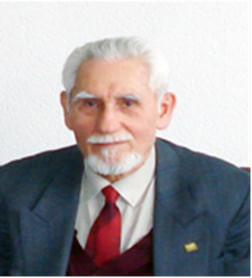
Shokir Zoidovich Tojiboev (1934–2022).
Shokir Zoidovich Tojiboev was born on August 19, 1934, in Tashkent. In 1954, he successfully graduated from the Tashkent Communication Technical School and, based on a merit-based recommendation, was admitted to the Novosibirsk Electrotechnical Institute of Communications. In 1960, he graduated from the institute with a degree in Radio Communication Engineering and began his professional career as an engineer at the Tashkent Television Center.
In 1969, he successfully defended his research thesis at the Moscow Electrotechnical Institute of Communications and was awarded the degree of Candidate of Technical Sciences. As one of the first highly qualified television specialists in Uzbekistan, he was appointed to the Tashkent Electrotechnical Institute of Communications.
He began his academic career as a Senior Lecturer at the Department of Radio Broadcasting and Television. In 1972, he was awarded the academic title of Associate Professor. From 1970 to 1980, he served as Head of the Department, and from 1980 to 1985, he held the position of Dean of the Faculty of Radio Communication, Radio Broadcasting and Television.
At the same time, he actively participated in public service. From 1970 to 1975, he served as Chairman of the Republican Council of the Student Scientific Society, and from 1975 to 1990, he chaired the Council on the “Methodology of Using Technical Means in Public Outreach” within the Republican “Knowledge” Society.
For his outstanding contributions to the field of communications, he was awarded several honorary titles by the Government of Uzbekistan, including “Honorary Radio Operator,” “Honored Communication Worker of Uzbekistan,” “Master of His Profession,” and “Honored Youth Mentor of Uzbekistan.”
Over the course of his 70-year professional career, this distinguished scientist, inventor, and devoted mentor—widely regarded as one of the founding figures of Uzbek television—authored 2 monographs, the only Uzbek-language textbook in the field of Television in Uzbekistan, 16 teaching manuals, more than 20 methodological guides, 4 patented inventions, around 10 rationalization proposals, over 200 scientific articles, and 40 scientific-methodological publications.
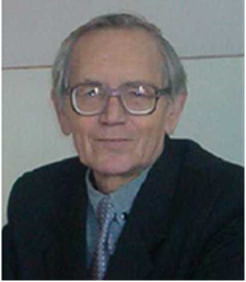
Gabzalilov Galiy Faxretdinovich,
Gabzalilov Galiy Fakhretdinovich was born on November 17, 1939, in the village of Sharaevo, Karmaskaly District, Republic of Bashkortostan.
After completing the 7th grade in 1954, he entered the Sverdlovsk Radio Engineering Technical School and successfully graduated in 1958. He was then called up for compulsory military service. After completing his service, in 1961 he enrolled at the Tashkent Electrotechnical Institute of Communications and graduated in 1966.
In the same year, he was again called to military service as an officer and served as Commander of the Radio Bureau in a military unit known as “Kyzyl Suv Toshqini” in the Tashkent region.
In 1968, G.F. Gabzalilov began his academic career as a lecturer at the Tashkent Electrotechnical Institute of Communications. Throughout his professional life, he worked at this institute, advancing from Assistant Lecturer to Head of the Department of Linear Electric Circuit Theory, and later to Head of the Department of Antenna–Feeder Devices and Electrodynamics.
He was also one of the consulting engineers involved in the design of radio and television antennas for the Tashkent Television Tower. During the installation and broadcasting processes, he ensured that the work was carried out without causing damage to the architectural structure.
A significant part of his scientific activity was devoted to the research and development of specialized medical equipment designed for the early-stage treatment of cancer using microwave radiation. He authored numerous scientific articles, teaching manuals, and monographs on antennas and microwave radiation. Under his supervision, two researchers successfully defended their Candidate of Sciences (PhD-equivalent) dissertations.
Galiy Fakhretdinovich Gabzalilov was a respected leader who earned the deep respect and sincere appreciation of his colleagues, students, and disciples. For his dedicated service, he was awarded the honorary title of “Honorary Radio Operator.”
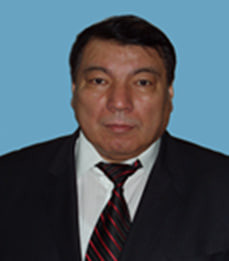
Candidate of Technical Sciences, Associate Professor, Professor Tohir G‘ofurovich Rakhimov graduated from the Tashkent Electrotechnical Institute of Communications in 1969 and, by official recommendation, was admitted to the postgraduate program at the Moscow Electrotechnical Institute of Communications. In 1973, after successfully completing his postgraduate research, he returned to the Tashkent Electrotechnical Institute of Communications and began his academic career as an Assistant at the Department of Television and Radio Broadcasting.
Over the years, Tohir G‘ofurovich established himself as a highly qualified specialist, proactive leader, and active public figure. He applied his deep knowledge and extensive experience in several high-level positions, including Minister of Communications of the Republic of Uzbekistan, Minister of Foreign Economic Relations of the Republic of Uzbekistan, General Director of “Mahalliy Telekom” Joint-Stock Company, Director of the Radio Communication, Radio Broadcasting and Television Center, and Vice President of the International Academy of Communications.
From 2008 until the end of his life, he served as a Professor at the Department of Television and Radio Broadcasting Systems at Tashkent University of Information Technologies named after Muhammad al-Khwarizmi.
Under Professor Rakhimov’s leadership, the department’s material and technical base was significantly modernized. Throughout his pedagogical career, he authored dozens of scientific and methodological publications and supervised more than 50 bachelor’s and master’s graduation theses.
He co-authored the textbooks “Radio Engineering Systems” and “Digital Television,” which were published in Uzbek and Russian and widely used in the higher education system.
Professor Rakhimov was a caring yet demanding mentor to his students. Among his mentees were recipients of prestigious scholarships, including two recipients of the Muhammad al-Khwarizmi Scholarship, one recipient of the Beruni State Scholarship, and one recipient of the Presidential State Scholarship of the Republic of Uzbekistan.
For his dedicated service in the field of communications and informatization, Professor Rakhimov received numerous state awards and honorary titles, including “Honored Communication Worker of the Republic of Uzbekistan,” “Distinguished Honorary Radio Engineer,” the Badge of Independence of the Republic of Uzbekistan, and the Gold Medal of the International Academy of Communications, among other honors.
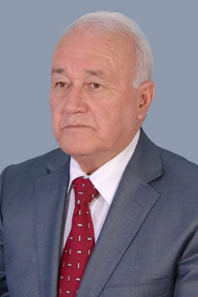
Zuparov Masud Zuparovich (1939-2012).
Masud Zuparovich Zuparov was a distinguished educator and scientist who devoted his life to the development of Uzbekistan’s communications sector and the training of communication engineers. In 1962, he graduated from the Tashkent Electrotechnical Institute of Communications with a degree in Radio Communication and Radio Broadcasting Engineering and dedicated his entire professional career to this institution.
He began his career as a Head of Laboratory, later serving as a Department Assistant and pursuing postgraduate studies at the Moscow Electrotechnical Institute of Communications. In 1971, he successfully defended his Candidate of Technical Sciences dissertation and returned to his home institute. Over the years, he held a number of responsible positions, including Head of Department, Dean of Faculty, Vice-Rector for Spiritual and Educational Affairs, and Head of the Internal Control and Monitoring Department. He also served for several years as Director of the Central Asian Telecommunications Training Center, making a significant contribution to regional education development.
Having devoted 50 years of his life to the university, M. Zuparov trained dozens of bachelor’s and master’s students, many of whom became leading specialists in the fields of communications and telecommunications.
Throughout his career, he actively participated in international projects such as TEMPUS, TACIS, and LIBANTA. In 2004, for his contribution to strengthening cooperation among CIS countries in the telecommunications field, he was admitted as a member of the International Academy of Communications. His co-authored textbook “Electroacoustics”, written together with Academician G.I. Katunin of the Siberian Academy of Communications and Professor of Novosibirsk University of Communications and Informatization, received a Third-Degree Diploma in a national competition in 2006.
- Zuparov authored more than 100 scientific and methodological works and over 10 textbooks and teaching manuals. His works are widely used not only at Tashkent University of Information Technologies but also at its regional branches. He was also the author of the first explanatory dictionary in the fields of Radio Broadcasting and Electroacoustics, as well as the first Uzbek-language textbooks in Latin script in these areas.
Today, many of his students hold leading engineering and managerial positions in telecommunications, informatization, and communication technologies across the republic. For his dedicated service, he was awarded prestigious state honors, including the titles “Skilled Communication Specialist” and “Honorary Radio Engineer.”
Masud Zuparovich Zuparov remains a great teacher and scholar whose name is firmly inscribed in the history of the university and in the development of the communications sector of Uzbekistan.
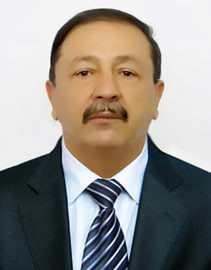
Contributions of Xoliq Sodiqovich Soatov. The work carried out at the department under the leadership of Xoliq Sodiqovich Soatov deserves special recognition. Serving as Head of the Department from 2015 to 2018, he led significant reforms that elevated the department’s scientific, methodological, and material-technical capacity to a new level. He distinguished himself both as a dedicated scholar and as an инициативе-driven leader.
During his tenure, scientific research activities and dissertation defenses intensified. In particular, two PhD dissertations — by A. Shakhobiddinov and A. Puziy — as well as one DSc dissertation — by B. Rakhimov — were successfully defended. This period marked a steady growth in the department’s scientific potential and became an important milestone in its history.
Under the leadership of X.S. Soatov, substantial efforts were made to strengthen the educational and methodological base. Notably, a bilingual (Uzbek and Russian) teaching manual on Digital Television was published. This publication became an important methodological resource not only for undergraduate and master’s students but also for specialists newly entering the field.
In addition, educational and methodological complexes for professional development courses were developed and officially approved. These materials enabled the organization of short-term training courses for practicing specialists at the national level.
During his leadership, interest in scientific research increased significantly, and faculty members as well as young researchers became more actively involved in scientific projects. International cooperation was strengthened, and innovative approaches, scientific initiatives, and technological advancements were actively introduced into the department’s activities.
The stable scientific and academic environment that later served as the foundation for the department’s further development and growing international engagement was formed during the leadership of Xoliq Sodiqovich Soatov.
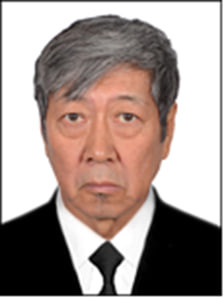
Vitaliy Sergeevich Kan has been a dedicated educator at the university since 1979. At the Department of Television and Radio Broadcasting Systems, he delivers lectures and conducts practical classes at a high professional level in all courses offered by the department.
He is the author of dozens of textbooks and teaching-methodological manuals. More than 40–45 years of his professional career have been closely associated with the Antenna–Feeder Devices and Electromagnetic Fields and Waves laboratories. He is widely recognized as a knowledgeable and experienced specialist capable of working with complex radio engineering systems, as well as a skilled and devoted teacher.
Thanks to his dedicated efforts, all laboratories within the department are consistently maintained in a state of readiness for scientific research. Currently, modern research is being conducted at the department, including the development of next-generation antennas designed for ultra-high-frequency ranges.
Vitaliy Sergeevich is also the founder of the “Radist” student club established within the Faculty of Radio and Mobile Communications. Under his direct supervision, hundreds of talented students have developed creative and innovative projects and have become regular participants and prize winners in international scientific and practical exhibitions held at the university and national levels.
Since the early years of Uzbekistan’s independence, he has made a significant contribution to strengthening the department’s academic staff with nationally trained specialists.
For his many years of dedicated service, Vitaliy Sergeevich Kan has been awarded the “Shuhrat” Medal by the Government of Uzbekistan and the “Master of His Profession” badge by the Ministry of Digital Technologies.
As a result of the persistent research efforts of Vitaliy Sergeevich Kan and Alisher Shopatxiddinovich Shakhobiddinov, significant practical and scientific work has been carried out in the construction of antenna–feeder systems, the design of phased antenna arrays, the correction of radiation patterns of existing television antennas, the study of radio wave propagation in large urban environments, the calculation of radio and television broadcasting coverage areas, and the preparation of environmental certification for radio facilities.
In addition, virtual and practical laboratory models have been developed and introduced into the educational process for student training.
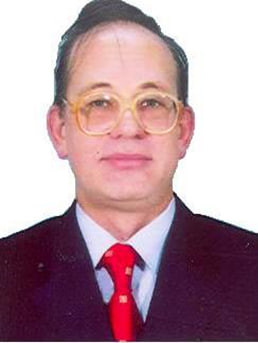
Igor Aleksandrovich Gavrilov is a highly qualified specialist in the field of television and participated in the development of video positioning methods in the national space sector. He has led four successful research projects in the area of television image processing.
As a successor to his mentor, Academician Yu.S. Sagdullaev, he continued the established scientific traditions and founded the Research Laboratory for Digital Television and Radio Transmission. Between 2009 and 2018, extensive research activities were carried out in this laboratory within the framework of State Research Programs.
Many talented students were involved in the laboratory’s activities. Among them were recipients of prestigious scholarships, including: Presidential Scholarship awardee Khabibullo Nosirov (currently Dean of the Faculty of Radio and Mobile Communications at TUIT, DSc, Associate Professor); “Radio Engineering Communication” MTB scholarship holders such as PhD Anastasiya Puziy (now Associate Professor of the TRET Department) and Senior Lecturer Xojiakbar Foziljonov (E&S Department); Beruni and “East-Telecom” scholarship holders Davletova Xolisaxon and PhD Diyorabegim Bobobekova (currently faculty members of the TI Department); “Huawei” scholarship holders Radmir Ibragimov, Shakhzoda Azimova, and Anastasiya Vasilieva; “East-Telecom” scholarship holders Mariya Mansurova and Marina Kim; MTB scholarship holders Mariya Suvorova, Darya Savitskaya, Veronika Shevaldova, Svetlana Otto, and Evgeniy Astashev; as well as “UzAAA” scholarship recipients Yuliya Kabanova, Kamila Nazarova, Aleksandr Chernyshov, Anton Lisunov, and many other young specialists. Today, many of them have become leading professionals in their respective fields.
Currently, new projects are being carried out in this laboratory by I.A. Gavrilov’s students, with his active involvement as a scientific advisor and mentor. Throughout his career, he has developed a teaching methodology based on dedication and an individual approach to talented students, placing special emphasis on developing analytical thinking, technical skills, and the ability to solve non-standard problems.
Igor Aleksandrovich Gavrilov is the author of numerous textbooks, monographs, and teaching manuals widely used in courses on digital television and video information processing. His works have been translated into Uzbek and Karakalpak. He has authored more than 200 scientific publications, including articles and conference papers published in leading European scientific databases.
Under his supervision, virtual and practical laboratory modules in digital television and video compression have been introduced into the educational process.
All of I.A. Gavrilov’s scientific and pedagogical activities are closely connected with the Department of Television at Tashkent University of Information Technologies. He is recognized not only as a highly qualified specialist, scientific supervisor, and skilled educator, but also as a mentor respected for his integrity, professionalism, and readiness to support both students and colleagues.