
Specific administrative support for Interdisciplinary Research
Tashkent University of Information Technologies named after Muhammad al-Khwarizmi provides specific administrative support for interdisciplinary research through a structured system that combines research governance, project coordination, documentation support, financial oversight, innovation management, and performance monitoring. In 2024, this support framework enabled research teams and individual researchers to move from scientific idea generation to formal project submission, implementation, reporting, intellectual property development, and innovation-based dissemination.
A central administrative function is carried out by the Department of Artificial Intelligence and Innovation Ecosystem Development. The department operates as an institutional support structure for scientific and startup projects and plays an active role in connecting university researchers and students with state scientific and technical programmes and other external opportunities. Its published responsibilities show that administrative support includes informing faculty members and researchers about project competitions, selecting initiative-based proposals, helping prepare project documentation, organizing the formalization of project-related documents, supporting staffing processes for temporary project teams, developing project budgets according to current rules, monitoring the correct use of project funds, and overseeing project reporting. This makes the department more than a general office; it functions as a practical administrative mechanism that helps interdisciplinary research teams navigate the full project cycle. For more information, click on the link below: https://tuit.uz/en/ilmiy-tadqiqot-bolimi
 |
 |
Administrative support is also reinforced by the Scientific and Technical Council. The council contributes to defining scientific and innovation priorities, discussing research directions, providing conclusions and recommendations, and organizing work based on annual plans. The regulation governing the council shows that it has the authority to review research-related matters, invite experts when needed, and prepare annual reports for the University Council. For interdisciplinary research, this is especially relevant because many projects require institutional review beyond a single faculty or department. The council therefore provides an internal governance platform through which cross-cutting research themes, implementation issues, and scientific recommendations can be handled at university level.
The university’s administrative support model also includes systematic monitoring of faculty research activity. In line with the relevant national framework, TUIT has implemented a system for monitoring the scientific activities of academic staff. This monitoring environment helps the university evaluate research engagement in a structured way and supports accountability in scientific performance. For interdisciplinary work, this matters because such projects often involve multiple outputs and multiple contributors, including publications, patents, startup activity, grant participation, and scientific supervision. A functioning monitoring system helps ensure that these activities are documented, reviewed, and recognized. For more information, click on the link below: https://tuit.uz/en/ilmiy-va-ilmiy-pedagogik-kadrlarni-tayyorlash-bolimi
The support system extends beyond research administration into innovation and commercialization. The same department is responsible for organizing startup and innovation competitions, creating favorable conditions for talented students to develop scientific and technical ideas, facilitating commercialization of research results, and coordinating national scientific-practical conferences. This combination of functions is particularly important for interdisciplinary science, where research often moves between academic inquiry, applied experimentation, and practical implementation. Administrative support at TUIT therefore includes not only paperwork and compliance, but also pathways for innovation transfer and external visibility. For more information, click on the link below: https://tuit.uz/en/ilmiy-faoliyat
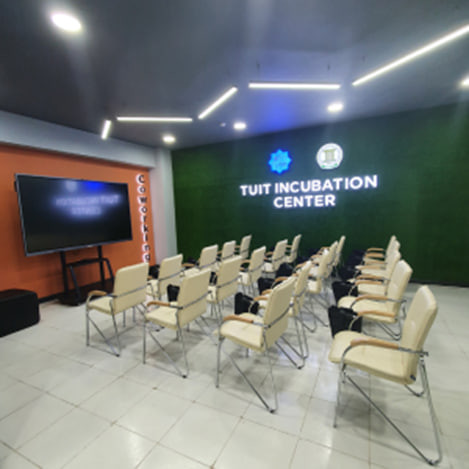
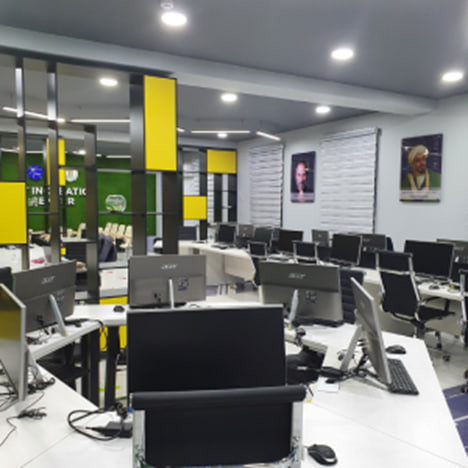
Practical evidence from 2024 demonstrates that this support system was active. The university reported that researchers secured three patents in 2024, which indicates that administrative pathways for intellectual property and innovation documentation were functioning. The TUIT Incubation Center also reported concrete startup achievements during 2024, including activity under “TUIT bright future week,” startup awards, and implementation of projects within the grant framework involving KOICA and Kookmin University. In addition, the university hosted project-based events such as the UCC hackathon and other innovation-focused activities that required organizational support, venue management, and programme coordination. These examples show that administrative support for interdisciplinary research at TUIT was operational, visible, and linked to measurable outputs. For more information, click on the link below: https://brightfuture.tuit.uz/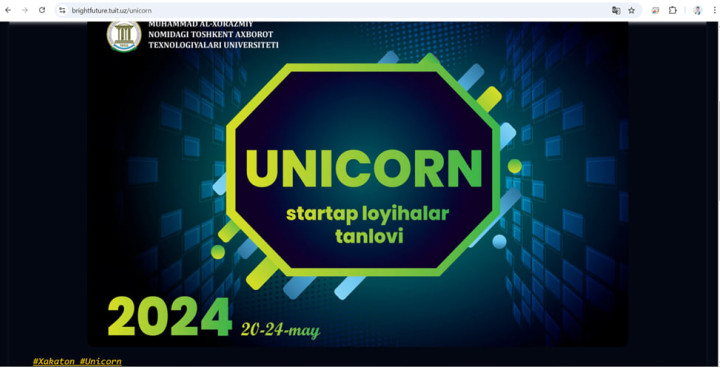
Overall, the university’s administrative model in 2024 supported interdisciplinary research at several levels: governance and review through the Scientific and Technical Council, project coordination through the Department of Artificial Intelligence and Innovation Ecosystem Development, innovation implementation through the Incubation Center, and faculty performance tracking through the scientific monitoring system. This combination created an institutional environment in which interdisciplinary ideas could be developed, formalized, funded, monitored, and translated into scientific and innovation outcomes.