
Physical Facilities for Interdisciplinary Research
Tashkent University of Information Technologies named after Muhammad al-Khwarizmi provides physical infrastructure that supports interdisciplinary research through specialized laboratories, innovation spaces, incubation facilities, and digitally enhanced learning and experimentation environments. In 2024, these facilities supported collaboration among faculty members, doctoral researchers, master’s students, undergraduate students, and innovation teams working across information technology, artificial intelligence, telecommunications, digital media, robotics, entrepreneurship, and other applied fields.
A major element of this infrastructure is the university’s network of scientific laboratories. Publicly available institutional information shows that the laboratories are distributed across faculties and departments and are used for educational, scientific, and applied research purposes. The laboratory system includes facilities such as the Artificial Intelligence Scientific Laboratory, Multimedia Scientific Laboratory, Drone Racing Laboratory, Antennas and Wave Propagation Laboratory, and other research spaces where students, doctoral researchers, teachers, and researchers carry out scientific and technical work. This is especially important for interdisciplinary science because these laboratories are not limited to one narrow theoretical function; they serve as practical environments where digital technologies, hardware systems, applied algorithms, communications technologies, and experimental solutions are developed and tested together.
Click on the link for detailed information of laboratories.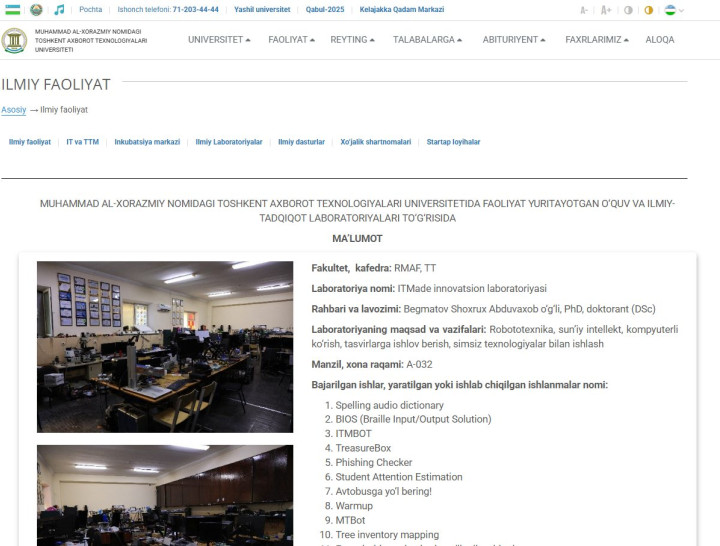
The university’s laboratory ecosystem also continued to develop structurally in 2024. Publicly available information on the scientific laboratories page shows that at least one laboratory unit was established in April 2024, demonstrating that the physical research base was not static but continued to expand during the reporting period. The laboratories are described not simply as classrooms, but as active sites for research, project development, experimentation, and scientific supervision involving different categories of university participants. This supports the university’s interdisciplinary profile because physical facilities are connected directly to research performance and not used only for standard teaching delivery.
Another important component of the university’s research infrastructure is the TUIT Incubation Center. The center provides dedicated space for students to work in coworking, design, robotics, and programming directions and to transform scientific and technical ideas into practical projects. According to the university’s published information, a separate incubation space is available on a 24/7 basis for startup implementation. In the context of interdisciplinary science, this infrastructure is significant because it connects technical knowledge with entrepreneurship, prototyping, software development, applied design, and commercialization processes. It allows research ideas to move beyond academic discussion into team-based development, testing, and external presentation.
Click for detailed information.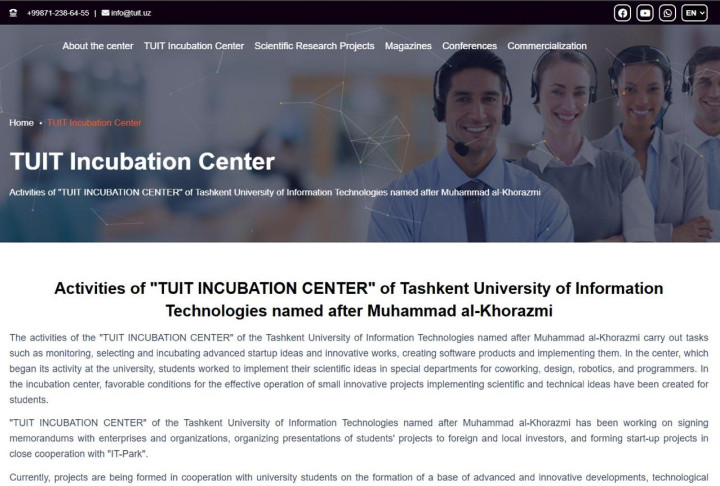
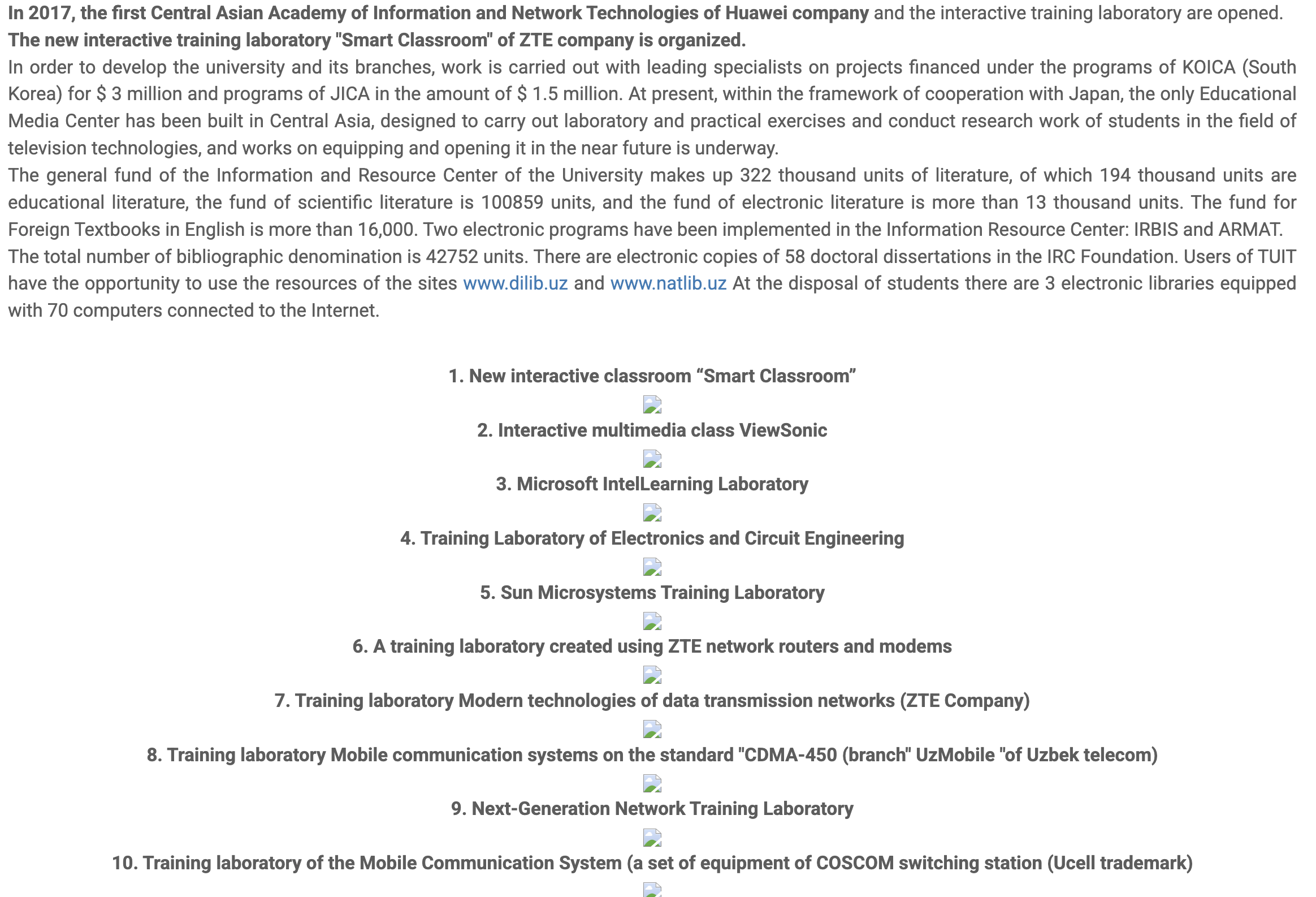
The university also demonstrated physical support for digital and research-based work through the Smart Classroom created with the support of ZTE. The opening of this intelligent classroom was publicly reported in March 2024. The classroom was designed to support a more interactive and research-oriented learning environment, including digital teaching tools, recording functions, remote learning support, electronic display systems, and opportunities for collaboration with foreign professors. While its primary role includes teaching enhancement, the infrastructure also supports interdisciplinary research capacity by making it easier to combine digital pedagogy, communication technologies, multimedia systems, and international academic exchange within one physical environment.
Click for detailed information.
The use of university buildings and rooms for innovation events in 2024 further illustrates the availability of interdisciplinary physical facilities. During the UCC hackathon held on 21–23 May 2024 within the framework of “TUIT bright future week,” multiple rooms in building E were used for project activity in directions such as digital technologies in social sectors, entrepreneurship and financial technologies, and digital agriculture. This demonstrates that the university’s facilities supported collaborative work across technical and applied domains and were actively used for interdisciplinary idea generation and project development.
Click for detailed information.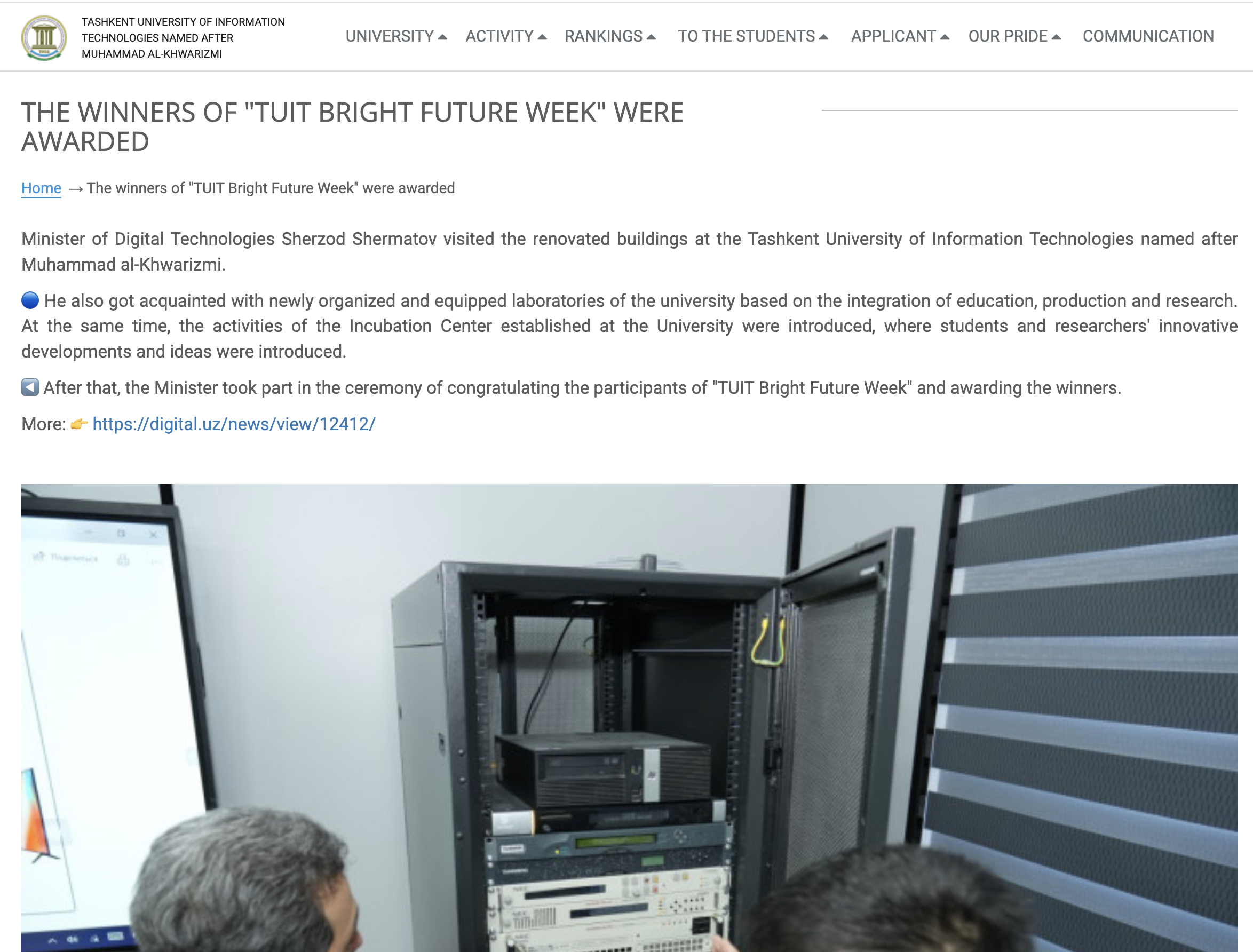
Taken together, the scientific laboratories, incubation spaces, intelligent classroom infrastructure, and project venues provided TUIT with a diversified physical base for interdisciplinary research in 2024. These facilities supported the university’s scientific, innovative, and applied mission by enabling collaboration across disciplinary boundaries and by creating environments in which ideas could be developed into research outputs, prototypes, startup projects, and practical solutions.