
SDG 13: Climate Action
Overview
Tashkent University of Information Technologies named after Muhammad al-Khwarizmi contributes to Sustainable Development Goal 13 by integrating climate action into its institutional sustainability framework, campus operations, educational activities, and technology-focused academic mission. As a major ICT university in Uzbekistan, TUIT recognizes that climate change is not only an environmental issue, but also a challenge that requires data, infrastructure, innovation, responsible management, and climate-aware professionals. The University’s activities during the 2024–2025 academic year show that climate action is approached through energy efficiency, renewable energy adoption, environmental education, responsible resource use, campus greening, and student engagement.
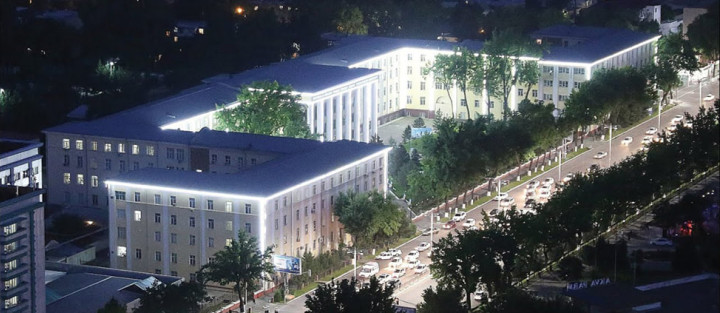

Uzbekistan faces serious climate-related risks, including desertification, water scarcity, land degradation, and pressure on natural resources. These national challenges make climate awareness and institutional-level action especially important. TUIT addresses these issues by educating students about environmental risks, promoting responsible behaviour on campus, and applying practical sustainability measures such as LED lighting, solar panel systems, tree planting, and waste reduction. Through these efforts, the University contributes to both mitigation and adaptation: reducing environmental impact while preparing students to understand and respond to climate challenges in their future professional roles.
TUIT’s contribution to climate action is also connected to its wider role in digital transformation. Modern climate solutions increasingly depend on ICT systems, environmental monitoring, smart energy management, data analytics, remote sensing, and efficient infrastructure. By educating specialists in telecommunications, artificial intelligence, automation, data systems, software engineering, and smart infrastructure, TUIT helps prepare the human capital needed for climate-conscious technological development in Uzbekistan.
Research & Innovation
TUIT’s Scopus-indexed research portfolio includes 17 articles classified under SDG 13, representing 0.7% of the University’s total SDG-related Scopus output. These publications cover areas such as climate modelling, atmospheric analysis, air quality monitoring, environmental data analytics, and related digital systems. Although SDG 13 is not one of the largest categories in TUIT’s publication portfolio, it is closely connected to the University’s broader strengths in ICT, engineering, automation, telecommunications, and applied data technologies.
As a technology-focused university, TUIT has strong potential to contribute to climate action through research in climate monitoring infrastructure, environmental dashboards, smart energy systems, emissions-reduction technologies, IoT-based sensing, predictive analytics, and data-driven decision-making. These areas are increasingly important because climate action requires reliable information, early warning capacity, infrastructure optimization, and efficient management of energy, transport, water, and urban systems. TUIT’s ICT capabilities position the University to contribute not only to academic research, but also to practical digital tools that support climate resilience.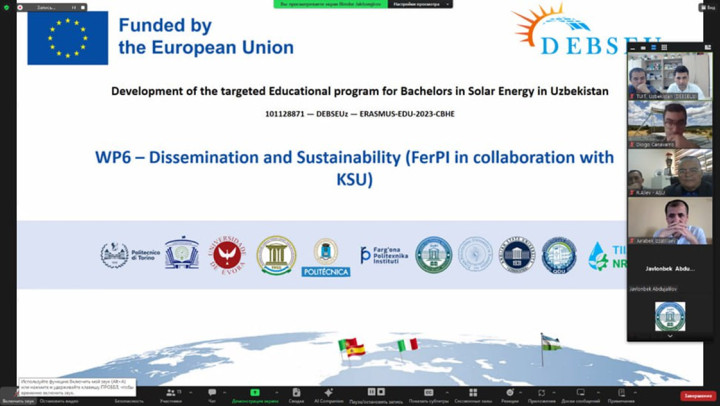
https://t.me/tuituz_official/19890
A particularly relevant example is the DEBSEUz ERASMUS+ project on solar energy, implemented with international partners including Universidad Politécnica de Madrid. This project connects TUIT to European experience in renewable energy education, research, and capacity building. It also supports the development of knowledge and skills related to clean energy transition, which is directly relevant to climate mitigation. Through such international projects, TUIT strengthens its ability to connect local climate action with global sustainability knowledge and technological standards.
 |
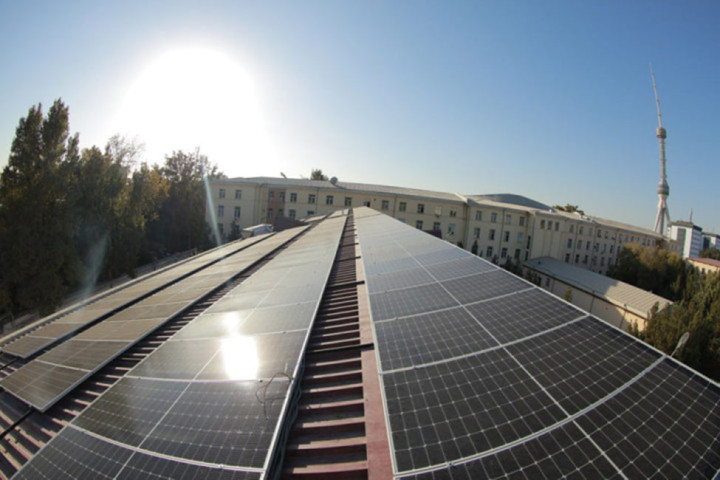 |
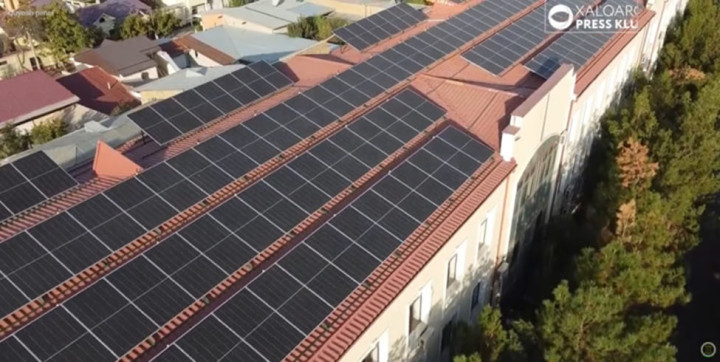
TUIT’s campus modernization activities also reflect applied innovation in climate action. Solar panel systems installed on campus demonstrate institutional commitment to renewable energy and provide a visible example of cleaner energy use within a public university setting. LED lighting and efficiency-focused operations contribute to lower energy consumption, helping reduce indirect greenhouse gas emissions associated with electricity use. These measures show that climate-related innovation can be implemented not only through research projects, but also through practical institutional operations.
Education & Students
Education is one of TUIT’s most important contributions to SDG 13. The University includes “Ecology” as a mandatory academic subject, covering climate change, pollution, ecosystem protection, environmental responsibility, and sustainable development principles. This ensures that students are introduced to climate and sustainability issues regardless of their specific ICT or engineering specialization. Such education is important because future technology professionals will make decisions that affect infrastructure, resource use, energy efficiency, and environmental impact.
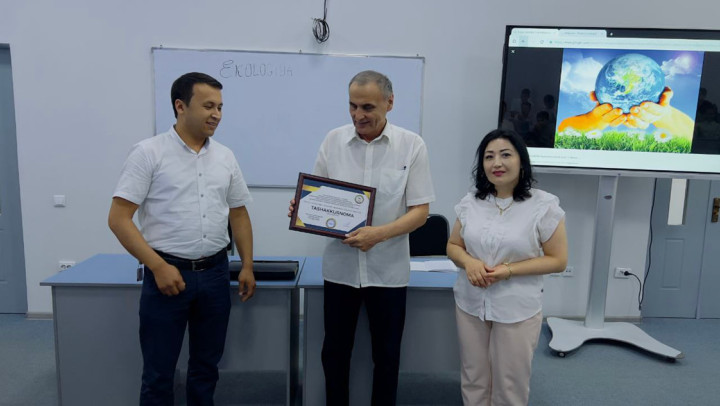
Students are also introduced to climate risks that are especially relevant to Uzbekistan, including desertification, land degradation, water scarcity, and ecosystem pressure. This local focus is important because climate education becomes more meaningful when students understand how global environmental challenges affect their own country and communities. By linking climate change with Uzbekistan’s development context, TUIT helps students see sustainability not as an abstract international issue, but as a practical national priority.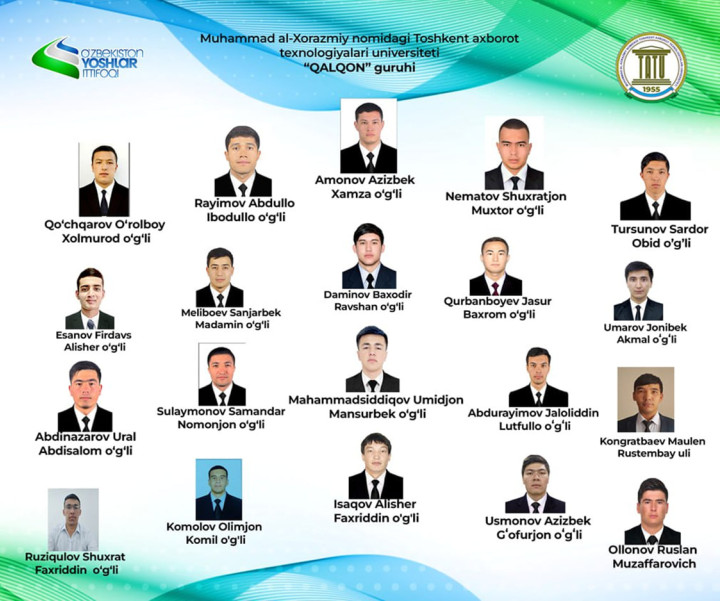
TUIT also promotes climate awareness through student engagement and environmental responsibility initiatives. The student group “QALQON” contributes to environmental order in dormitories, university areas, and community spaces. Its activities help build a culture of cleanliness, responsibility, and care for shared environments. In the context of SDG 13, such behaviour matters because climate action depends not only on large infrastructure projects, but also on daily habits, responsible consumption, waste discipline, and collective participation.
The University’s educational mission also prepares students to develop climate-relevant technologies. Students in fields such as artificial intelligence, telecommunications, automation, computer engineering, software engineering, data systems, and digital management gain skills that can be applied to smart energy systems, efficient transport, urban monitoring, environmental analytics, and green digital infrastructure. These disciplines are increasingly important for climate adaptation and mitigation because they help societies optimize resources, reduce waste, monitor environmental changes, and design more efficient systems.
https://t.me/tuituz_official/25407
The reported “Avtomobilsiz kun” or Car-Free Day action on 23 April 2025 is also relevant to climate education and awareness. According to the institutional materials, the campaign encouraged staff and students to use public transport, cycling, and walking instead of private cars, contributing to awareness of transport-related emissions. However, since the current evidence file marks this event as requiring an official source, it should be supported with a verified Telegram post, internal announcement, or photo evidence before being used as a final confirmed claim.
Community & Partnerships
TUIT’s climate action extends beyond teaching and research into community engagement and institutional partnerships. In alignment with Uzbekistan’s national environmental agenda, including the declaration of 2025 as the Year of Environmental Protection and Green Economy, the University promoted sustainability-oriented activities among its large student and staff community. With more than 31,000 students across TUIT and its regional branches, such messaging has significant awareness-building potential.
https://gov.uz/en/eco/news/view/28064
One of the clearest community-facing climate actions is TUIT’s participation in the national “Yashil Makon” Green Space initiative. During the reporting period, the University planted more than 600 ornamental and fruit trees in Tashkent’s Yunusobod district and in campus areas. Tree planting contributes to climate action by supporting urban greening, improving air quality, reducing heat effects, strengthening public spaces, and encouraging environmental responsibility among students and staff. While tree planting alone cannot solve climate change, it is an important visible action that connects campus sustainability with national greening efforts.
Yashil Universitet — TUIT green campus page
TUIT’s solar energy systems also demonstrate community-level leadership in renewable energy adoption. By installing solar panels on campus, the University provides a practical example of how public institutions can begin shifting toward cleaner energy sources. This has educational value as well, because students can observe renewable energy implementation in their own learning environment. Combined with LED lighting and efficiency measures, solar energy adoption shows that climate action can be embedded into everyday institutional infrastructure.
https://tuit.uz/talabalar-oshxonasi
Responsible waste management also contributes to TUIT’s climate action agenda. The University’s sustainability materials describe a food waste separation and reuse system in which cafeteria food waste is redirected for agricultural use as animal feed. This is relevant to climate action because reducing food waste sent to landfills can help lower methane emissions associated with organic waste decomposition. The reported average amount of food waste collected and reused was 1,108 kilograms per month in 2024. However, as noted in earlier SDG sections, the specific Taste Point and Oqtosh village details should be supported with additional official evidence before final submission.
TUIT’s participation in climate and sustainability-related international cooperation further strengthens its contribution to SDG 13. The DEBSEUz ERASMUS+ renewable energy project connects the University with European partners and supports institutional capacity in solar energy and clean energy transition. Through this type of partnership, TUIT gains access to international expertise, strengthens sustainability-related education, and contributes to the development of climate-aware specialists in Uzbekistan.
Key Results
|
Indicator |
Result |
|
Scopus articles (SDG 13) |
17 (0.7% of total) |
|
Solar energy systems |
Installed on campus |
|
LED lighting (energy reduction) |
Campus-wide |
|
Car-Free Day participation |
April 2025 |
|
Trees planted (climate/greening) |
600+ |
|
Mandatory Ecology course |
Active |
|
ERASMUS+ renewable energy (DEBSEUz) |
Active (grandholder) |