
Tenure or Career Promotion System for Interdisciplinary Research
Tashkent University of Information Technologies named after Muhammad al-Khwarizmi recognizes interdisciplinary research within its broader academic career development and scientifi c recognition framework. In the context of Uzbekistan’s higher education and research system, career progression is linked not only to teaching activity but also to scientifi c productivity, academic degrees, academic titles, research supervision, participation in scientifi c projects, innovation outputs, and contribution to the development of the university’s research environment. In 2024, TUIT’s institutional practice refl ected this model through its combination of national attestation rules, university-level scientifi c governance, research monitoring, and formal recognition of academic achievements. For more information, click on the link below: https://tuit.uz/en/ilmiy-faoliyat
The national framework is important for understanding how recognition operates. Uzbekistan’s regulation on the awarding of academic titles defi nes the categories of professor, associate professor (dotsent), and senior research fellow and establishes that the relevant attestations are granted through the state attestation system. This creates an offi cial pathway through which academic advancement is formally recognized. In parallel, the national regulation on additional payments for employees engaged in scientifi c and scientifi c-pedagogical work provides a fi nancial recognition mechanism for staff holding scientifi c degrees. These regulations form part of the broader environment in which universities such as TUIT assess and encourage academic and scientifi c development. For more information, click on the link below: https://oak.uz/
Within this framework, TUIT’s internal structures support career development through scientifi c governance and performance evaluation. The Scientifi c and Technical Council exists to defi ne scientifi c and innovation directions, promote the use of research results, and support the training of highly qualifi ed scientifi c and pedagogical personnel. This is relevant for interdisciplinary research because academic advancement increasingly depends on the ability of staff to participate in complex research tasks that cross disciplinary boundaries and contribute to the university’s scientifi c standing. When interdisciplinary publications, patents, externally supported projects, applied developments, and innovation outcomes are produced, they become part of the researcher’s broader scientifi c profi le and institutional value. For more information, click on the link below: https://science.tuit.uz
The university’s research administration also contributes to career progression by creating opportunities for staff and researchers to participate in scientifi c and startup competitions, state programmes, project implementation, patenting, and commercialization. The implemented system for monitoring scientifi c activities of faculty members provides a practical mechanism through which research engagement can be observed and evaluated. In a university focused on information technologies, interdisciplinary outputs may include scientifi c publications, technical developments, startup initiatives, patents, conference participation, and collaborative international work. These outputs strengthen the academic record of individual researchers and support their progression within the institution and within the national scientifi c system. For more information, click on the link below: https://lms.tuit.uz/auth/login

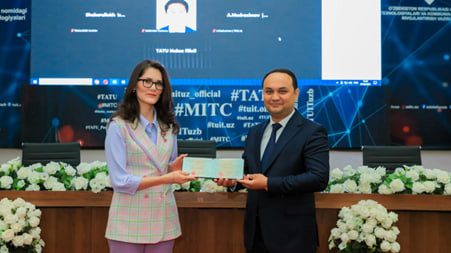
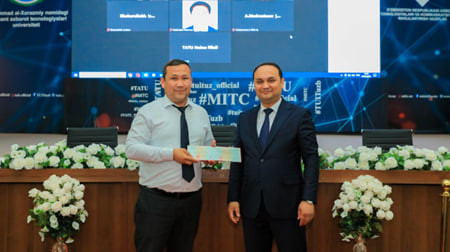
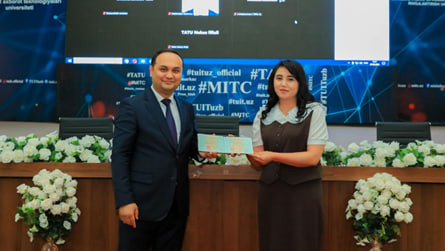
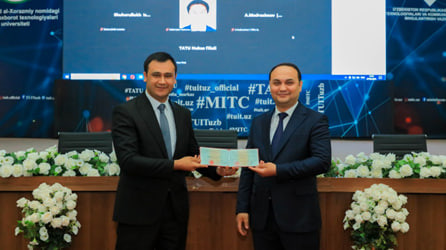
Publicly available university information from 2024 shows that scientifi c recognition was active at institutional level. At the meeting of the TUIT Council on 29 August 2024, academic degree diplomas and academic titles awarded by the Higher Attestation Commission were formally presented to professors, teachers, and staff . This is an important indicator because it shows that academic progression was not only theoretical but visibly implemented during the reporting year. It also demonstrates that scientifi c achievement was institutionally recognized within the university environment.
 |
 |
 |
 |
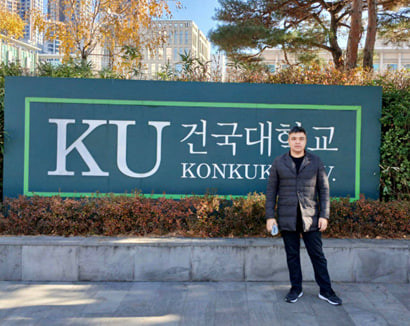
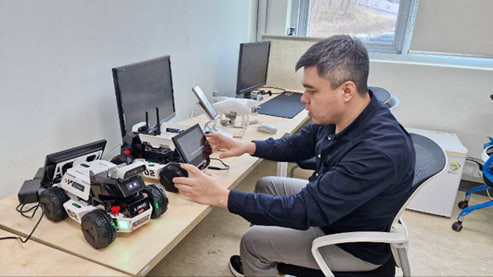
Career development linked to interdisciplinary research can also be seen through doctoral and international scientifi c activity. Publicly available information reports that a TUIT doctoral researcher obtained a scientifi c internship grant for research at Konkuk University’s IRASC laboratory in South Korea in 2024, and that this work involved robotics, ROS programming, SLAM, reinforcement learning, deep learning, autonomous path planning, and publication planning in Scopus- and WoS-indexed journals. This kind of activity illustrates how interdisciplinary scientifi c engagement contributes to the development of individual academic careers by expanding research competence, strengthening publication potential, and increasing international research collaboration.
 |
 |
For TUIT, therefore, recognition of interdisciplinary research within career progression in 2024 should be understood as part of an integrated academic development model. Academic titles and scientifi c degrees are granted within the national attestation framework; scientifi c performance is supported by university-level research governance; research productivity is monitored institutionally; and achievements such as publications, patents, grants, startup activity, scientifi c supervision, and international internships contribute to the academic reputation and progression of researchers. In this sense, interdisciplinary research is recognized not as a separate symbolic category, but as a meaningful and valuable component of academic career advancement within the university’s scientifi c ecosystem. For more information, click on the link below: https://tuit.uz/en/karyera-markazi