
Sustainability
SDG 7 Affordable and Clean Energy · Sustainability evidence 2025
Energy efficiency plan to reduce overall energy consumption
Evidence for the THE Sustainability Impact Ratings 2027 · Indicator 7.2.4 · Reference period: calendar year 2025
Tashkent University of Information Technologies named after Muhammad al-Khwarizmi has an energy efficiency plan to reduce its overall energy consumption. The Energy and Carbon Management Policy, approved on 30 August 2024 (TUIT-SP-02, paragraph 7), sets out the plan: the University aims to reduce its energy consumption per square metre of floor area by 10% by 2030 compared with 2025, with annual measures included in the Building Upgrade Plan and the Climate Action Plan. The measures include energy-efficient lighting, heating, ventilation and air conditioning, regular energy reviews, monitoring of consumption and renewable energy. The Policy replaced the Energy Conservation Program adopted in 2023.
- Scope
- TUIT main campus in Tashkent. Figures cover the main campus; activities of the regional branches (Fergana, Nukus, Samarkand, Nurafshon, and Urgench, which joined Urgench State University in 2025) are mentioned where TUIT took part. Activities described took place at the main campus unless a branch is named.
- Period
- Calendar year 2025 (1 January – 31 December 2025)
- Responsible unit
- Department of Housekeeping and Landscaping
Target
| 2024 | 2025 (baseline) | 2030 target | |
|---|---|---|---|
| Purchased electricity (kWh) | 1,900,000 | 2,331,596 | — |
| Electricity from own solar panels (kWh) | 705,200 | 981,288 | — |
| Natural gas (m³) | 234,753 | 386,748 | — |
| District heat (Gcal) | — | 4,084.6 | — |
| Floor area of the ten main buildings (m²) | — | 85,387 | 85,387 |
| Total energy use (GJ) | — | 40,299 | — |
| Energy use per m² (GJ/m²) | — | 0.47 | 0.42 |
Main measures
The following measures are carried out under the Energy and Carbon Management Policy (TUIT-SP-02, paragraphs 5, 6, 8 and 11):
- LED lighting with occupancy and daylight controls in corridors, auditoriums and toilets.
- Heating controls and individual heat substations in the largest buildings.
- Insulation of roofs and replacement of single-glazed windows.
- Additional rooftop solar panels, on top of the five solar plants already installed (755 kW, 1,366 panels).
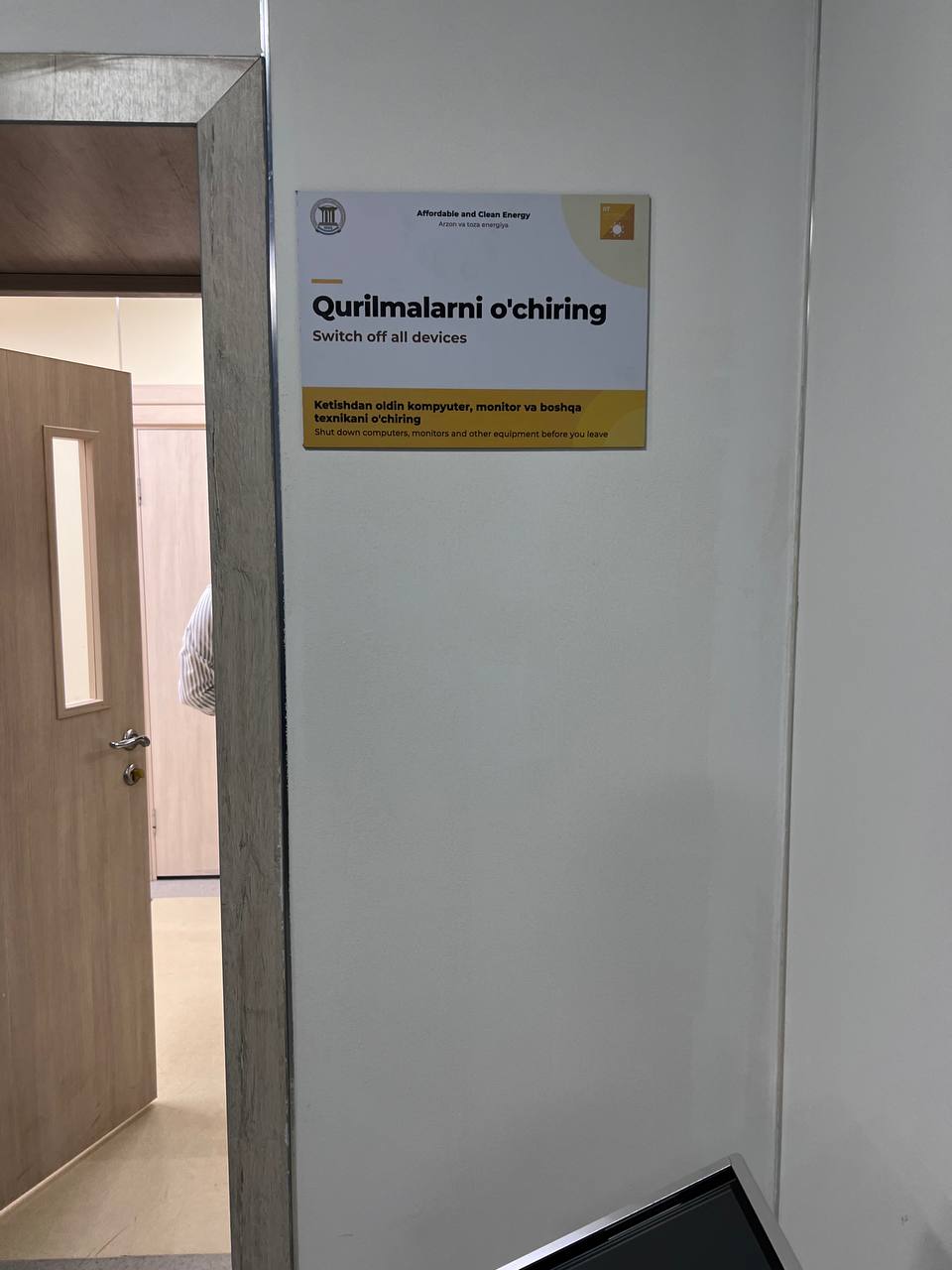
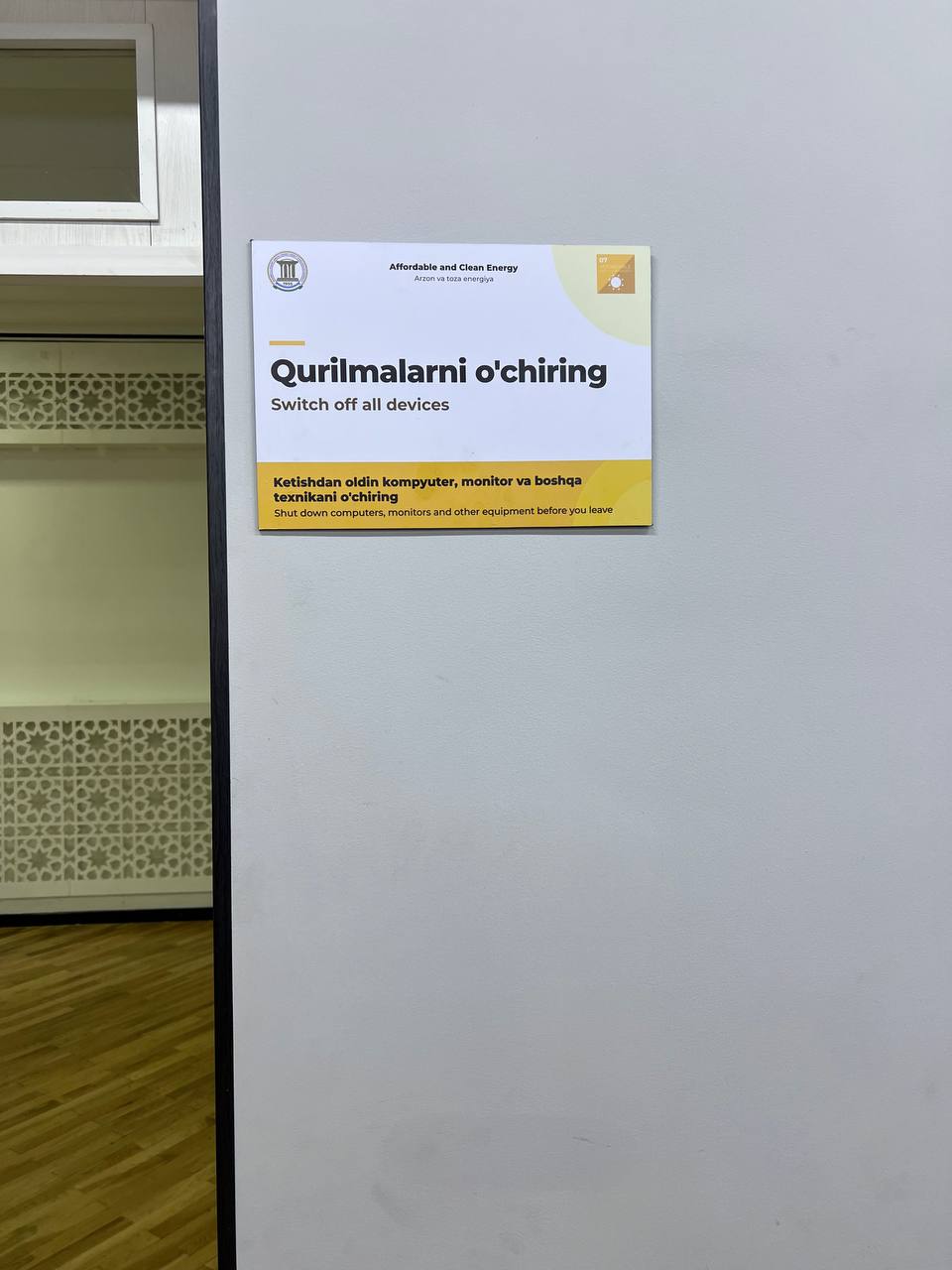
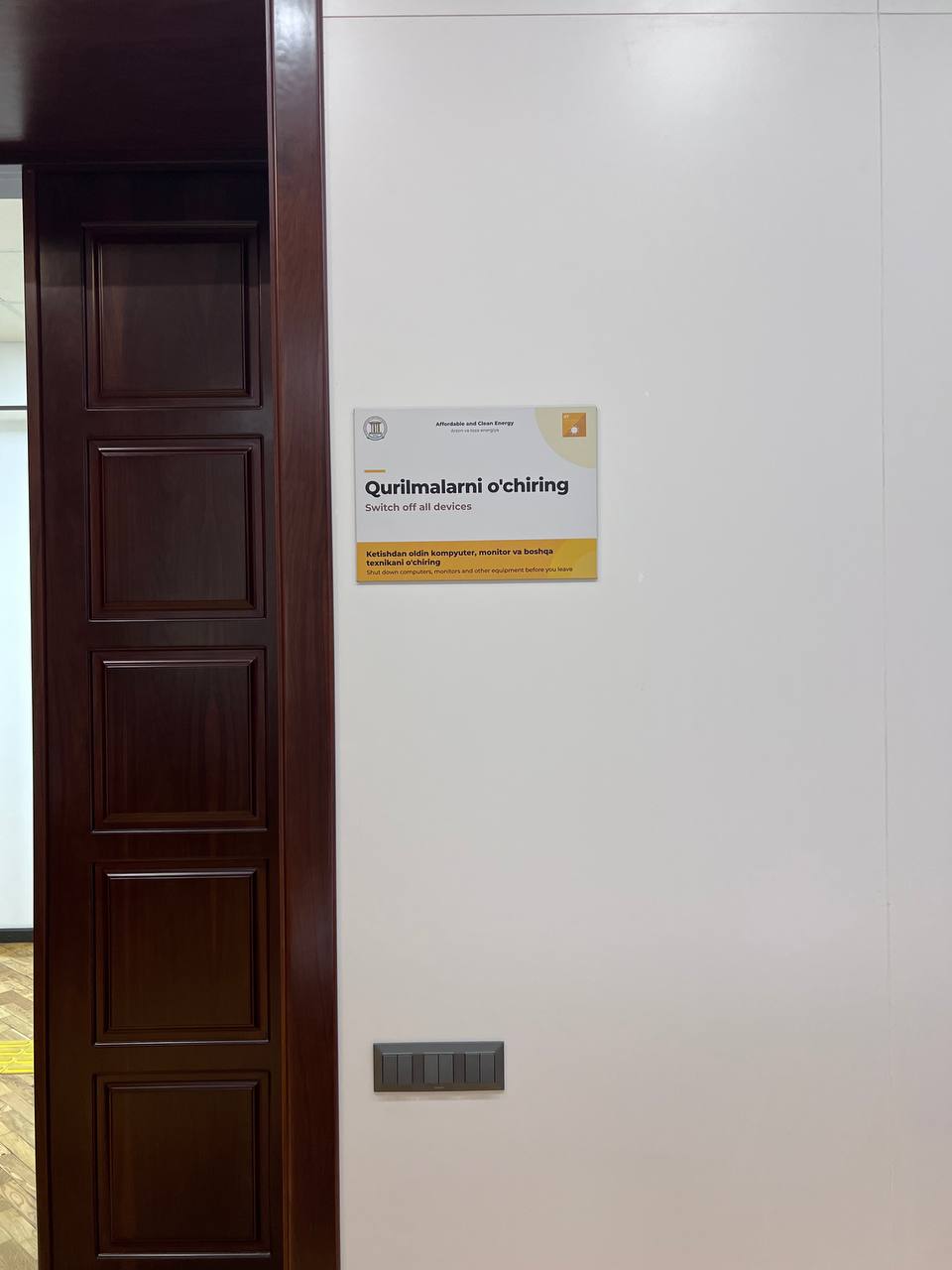
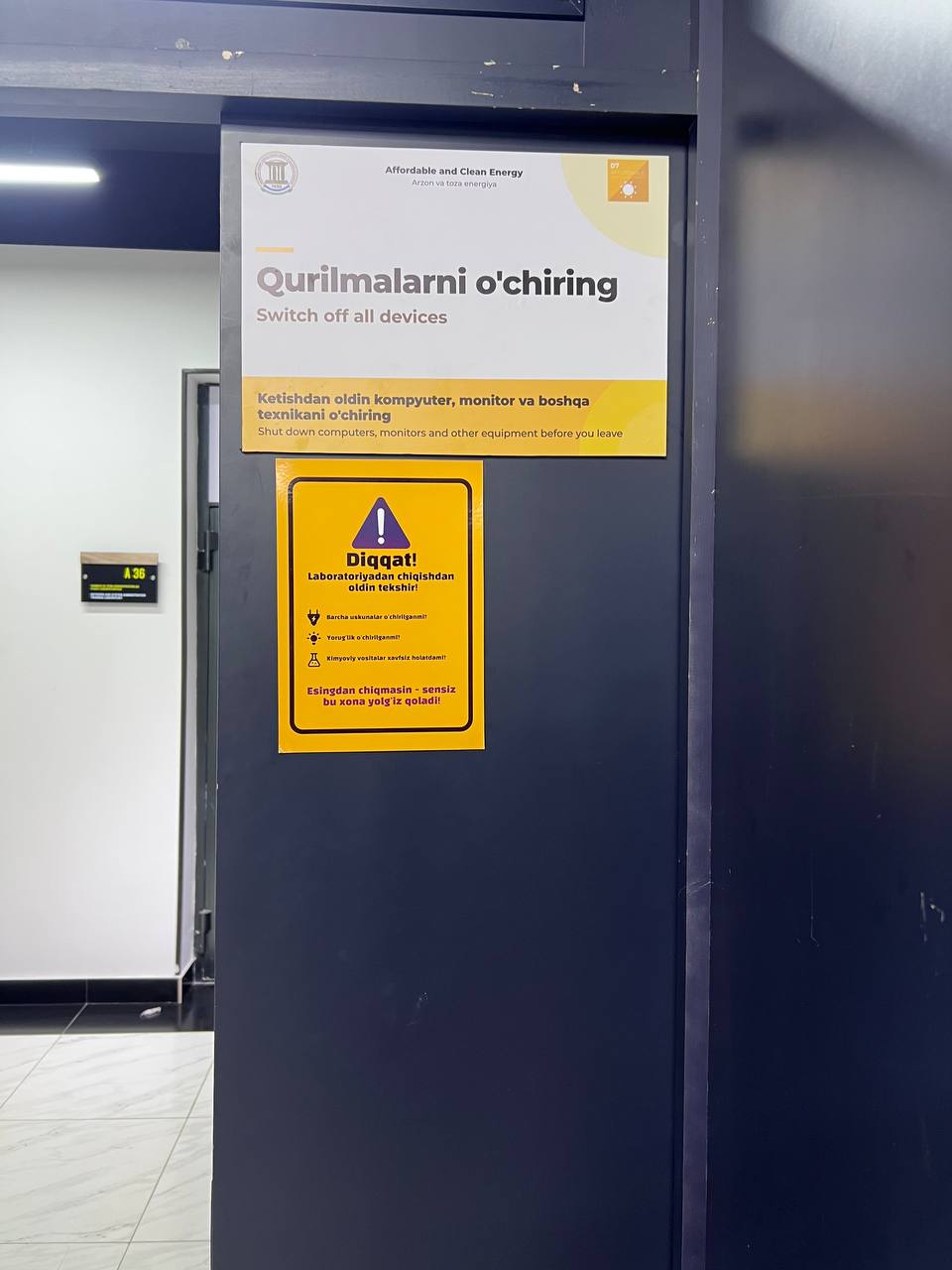
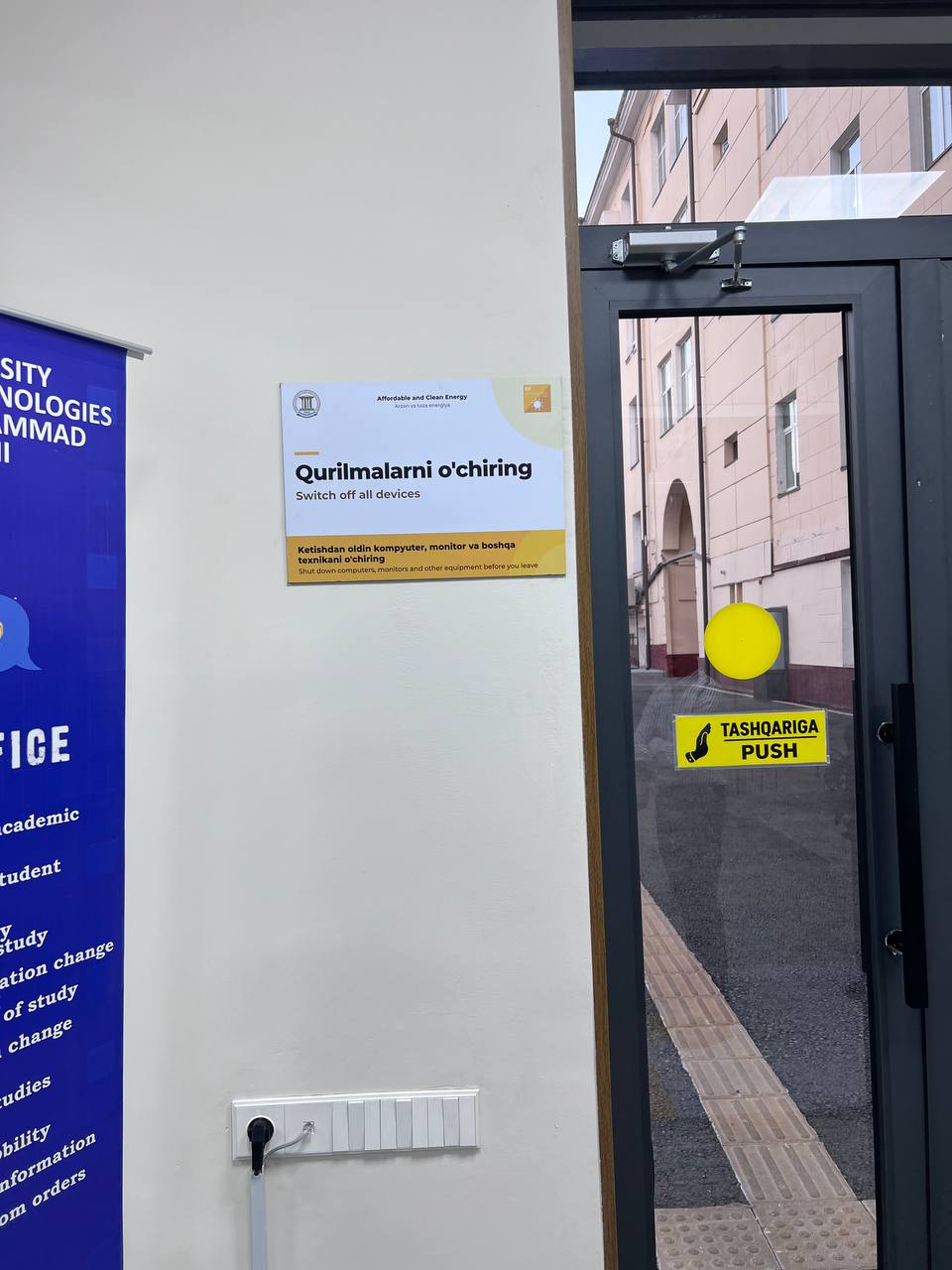
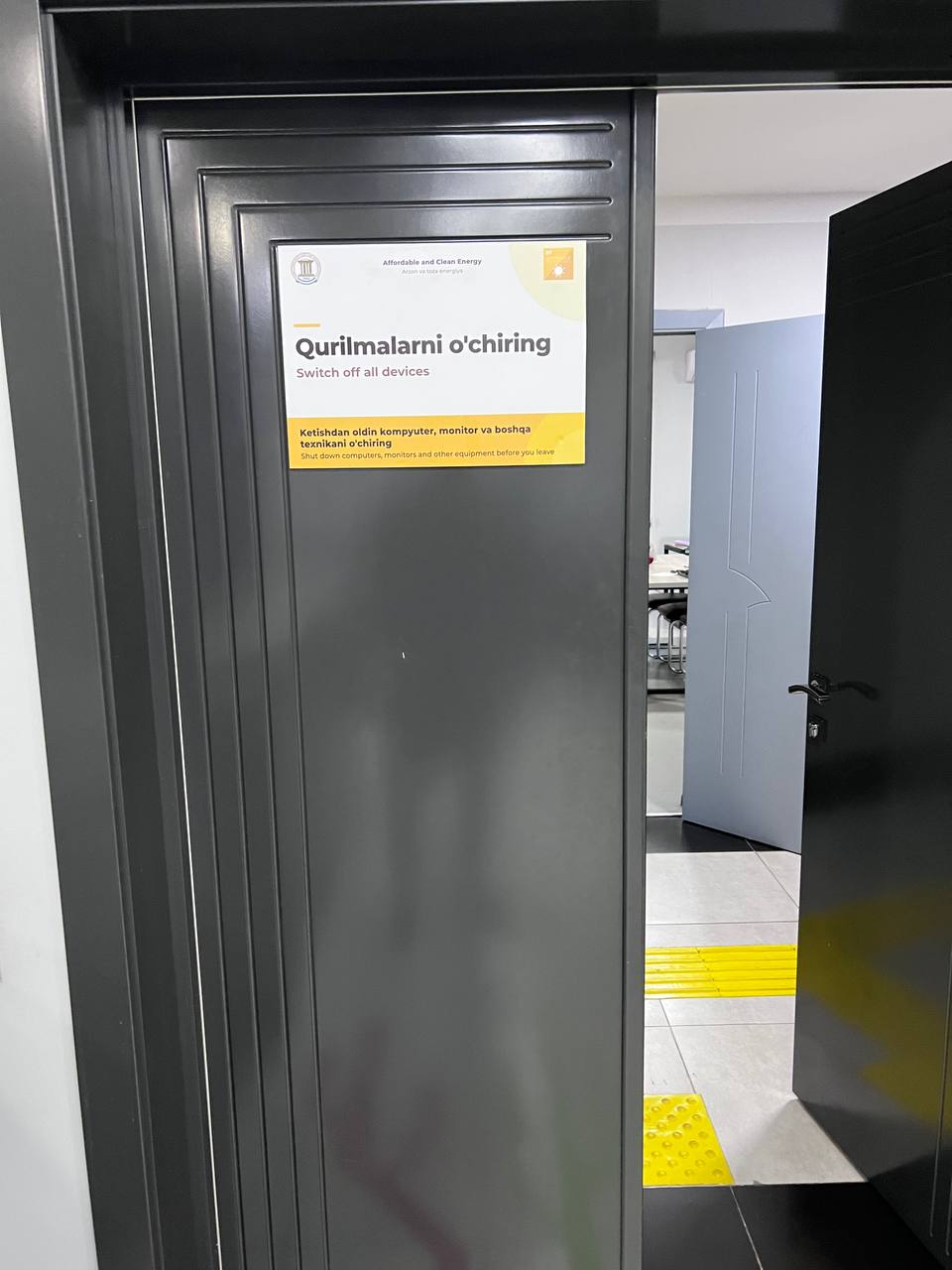
- Everyday rules: lighting, computers, projectors and air conditioners switched off in empty rooms; decorative outdoor lighting off from 23:00 to 06:00; room temperature 20–24 °C; energy-saving modes kept on.
Monitoring
Energy is metered monthly for each building. Progress is reviewed by the Sustainability Committee twice a year and reported in the annual report.
The target is set in the Energy and Carbon Management Policy (TUIT-SP-02, paragraph 7). Paragraph 8 requires regular energy reviews of the buildings and an annual inspection before the heating season, and lets employees and students report energy waste through the University’s request system.
This page is a public evidence record of Tashkent University of Information Technologies named after Muhammad al-Khwarizmi for the THE Sustainability Impact Ratings 2027 (reference period: calendar year 2025). Enquiries: rankings@tuit.uz.