
Sustainability
SDG 1 No Poverty · Sustainability evidence 2025
Support for students from low-income families to complete university
Evidence for the THE Sustainability Impact Ratings 2027 · Indicator 1.3.3 · Reference period: calendar year 2025
Tashkent University of Information Technologies named after Muhammad al-Khwarizmi provides support with food, housing, transport, legal advice and money to students from low-income families so that they can complete their studies. In 2025, 87 students from low-income families received financial aid, including 50 who received the University’s payment on top of the regular scholarship (18,400,000 UZS in total), and in 2025 523 students received free meals on campus. The figures refer to the main campus in Tashkent.
At a glance
- Free — Additional scholarships, free meals, free psychological and legal counselling
- Subsidised — Dormitory places at subsidised rates; free meals for students in need
- Scope
- TUIT main campus in Tashkent. Figures cover the main campus; activities of the regional branches (Fergana, Nukus, Samarkand, Nurafshon, and Urgench, which joined Urgench State University in 2025) are mentioned where TUIT took part. Activities described took place at the main campus unless a branch is named.
- Period
- Calendar year 2025 (1 January – 31 December 2025)
- Responsible unit
- Vice-Rector for Youth Affairs; Department of Finance and Economics
What students receive
| Support | What is provided | Free or subsidised | Use |
|---|---|---|---|
| Financial aid | Payment on top of the regular scholarship for students from low-income families and orphans | Free | 50 students; 18,400,000 UZS in 2025 |
| Food | Free meals in campus canteens | Free | 523 students; 120,450,000 UZS a year for food |
| Housing | Priority for dormitory places, at the regulated dormitory fee, for students from low-income families and orphans | Subsidised | Priority within the 2,536 dormitory places; regulated fee of 330,000 UZS a month |
| Legal advice | Free consultations with the University’s legal service | Free | Available to all students |
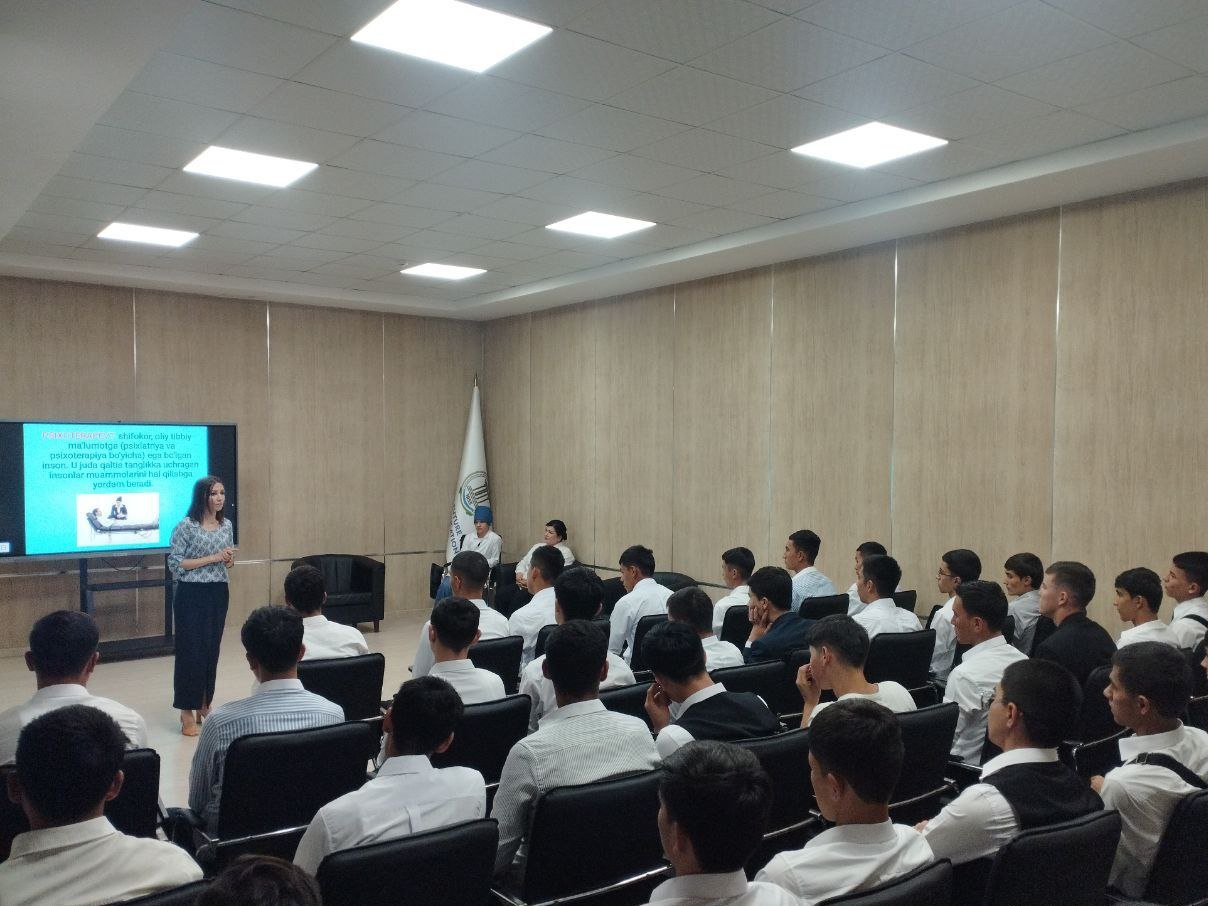
| Psychological support | Free counselling by the Department of Psychological Support and Personal Development | Free | Available to all students |
How students apply
Students apply through the dean’s office of their faculty. The Department of Youth Work, Spirituality and Education assesses each student’s social situation at the start of the academic year and again in the second semester, using documents from the mahalla citizens’ assembly and the state low-income registers. A commission chaired by the Vice-Rector for Youth Affairs decides on the support.
This page is a public evidence record of Tashkent University of Information Technologies named after Muhammad al-Khwarizmi for the THE Sustainability Impact Ratings 2027 (reference period: calendar year 2025). Enquiries: rankings@tuit.uz.