
SDG 16: Peace, Justice and Strong Institutions
Overview
Tashkent University of Information Technologies named after Muhammad al-Khwarizmi contributes to Sustainable Development Goal 16 through transparent institutional governance, merit-based educational access, student rights protection, anti-corruption systems, civic education, academic integrity, and the preparation of specialists who support secure and effective digital institutions. As a leading public university in Uzbekistan, TUIT operates within national higher education regulations and contributes to institutional trust through formal governance procedures, public communication, admissions transparency, scholarship announcements, student support systems, and participation in international benchmarking.
During the 2024–2025 academic year, TUIT’s contribution to SDG 16 was closely connected with its role as a national ICT university. Strong institutions increasingly depend on secure digital infrastructure, reliable e-government platforms, cybersecurity systems, data protection, digital identity, and information security. Through its academic programmes, research, and partnerships, TUIT prepares specialists who can contribute to the development of secure public institutions, responsible digital governance, and national cyber resilience.
TUIT also contributes to peace and institutional stability through its campus culture. Student rights, welfare services, smoke-free campus standards, gender equality measures, psychological support, non-discrimination principles, and civic awareness activities all support a safer and more respectful academic environment. In this sense, SDG 16 at TUIT is not only about law or governance; it is also about building a university community based on fairness, accountability, respect, responsibility, and trust.
Research & Innovation
TUIT’s Scopus-indexed research portfolio includes 61 articles classified under SDG 16, representing 2.6% of the University’s total SDG-related Scopus output. These publications cover fields such as cybersecurity, cryptography, e-government systems, digital identity, data protection, information security, and secure digital infrastructure. These areas are directly relevant to SDG 16 because modern justice, governance, public administration, and institutional accountability increasingly depend on trusted digital systems.
SDG 16 Peace, Justice & Str.pdf
 |
 |
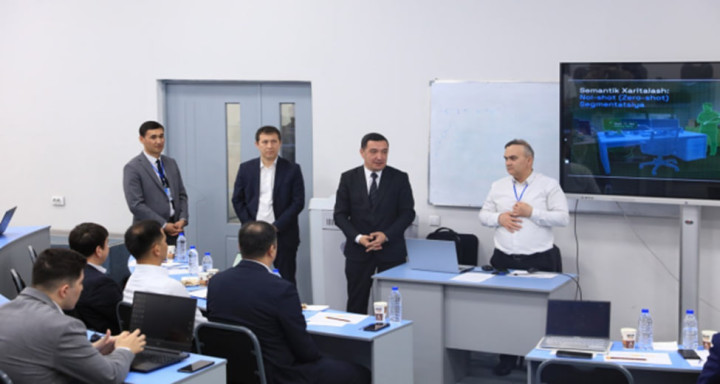
Cybersecurity is one of the most important links between TUIT’s ICT mission and SDG 16. Secure institutions require professionals who can protect public data, prevent cyber threats, secure communication systems, and support national digital infrastructure. TUIT’s Cybersecurity Faculty contributes to this agenda by training specialists for national cyber defence, digital governance, and information security. These graduates can support public institutions, private organizations, and critical infrastructure sectors where cyber resilience is essential for trust and stability.
https://tuit.uz/en/axborot-xavfsizligi-fakulteti
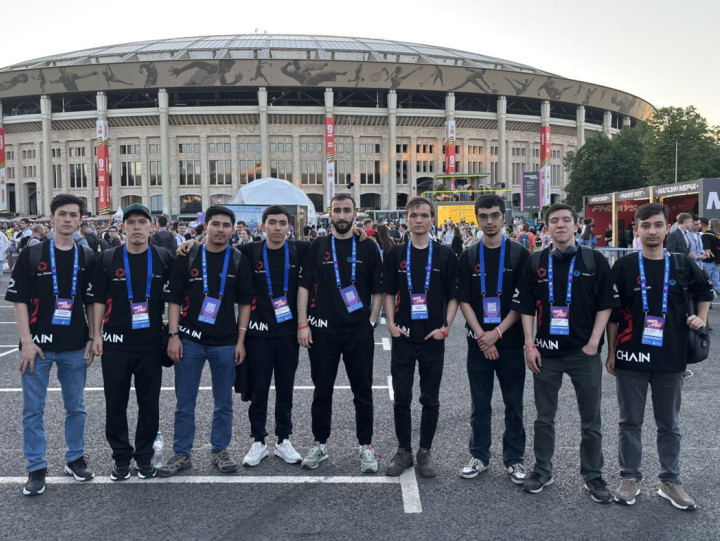
TUIT’s student achievements also demonstrate capacity in areas relevant to strong institutions. TUIT student Umurzoqov Quvonchbek competed at the international STANDOFF 15 cybersecurity competition in Moscow in May 2025, where participants competed with more than 30 elite hacker teams. This achievement reflects the University’s ability to develop talent in cybersecurity, ethical hacking, and digital defence — areas that are increasingly important for institutional security and public trust.
 |
 |
https://t.me/tuituz_official/25949
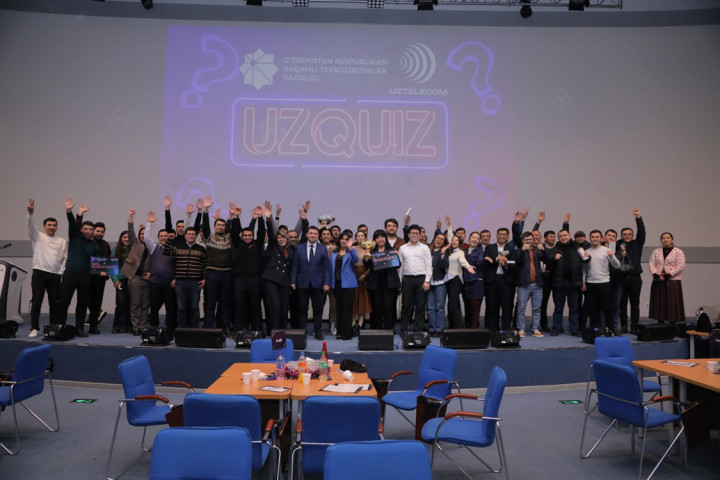
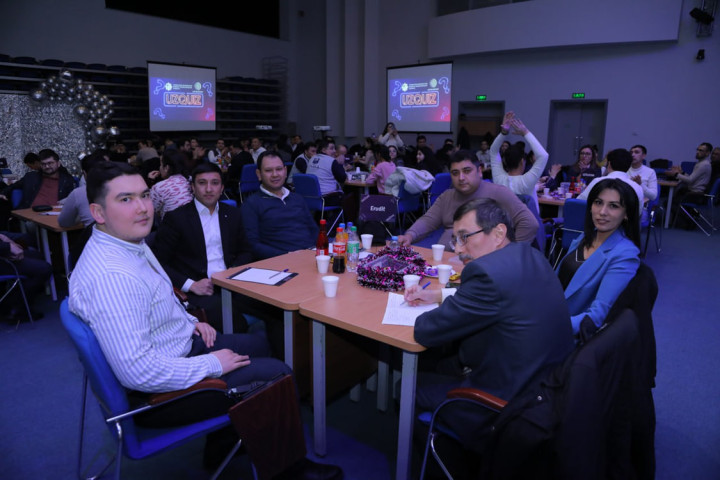
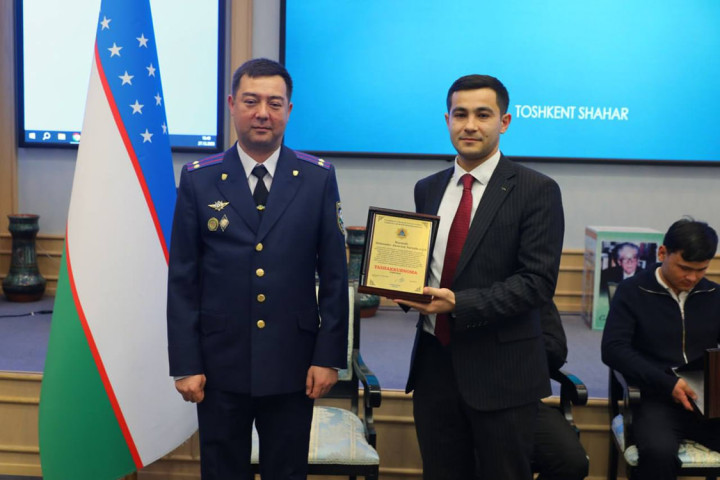
The University’s knowledge and academic strength were also demonstrated through national competitions and scholarship achievements. TUIT won first place in the UzQuiz national quiz championship organized by the Ministry of Digital Technologies in December 2024. In addition, 32 TUIT students and 4 lyceum students received the Ministry of Digital Technologies Scholarship in November 2024, while student Abduhakimov Fayzulla won the Presidential State Scholarship in Computer Engineering in January 2025. These achievements support the SDG 16 narrative because merit-based recognition, knowledge development, and transparent academic achievement contribute to stronger educational institutions.
 |
 |
 |
https://t.me/tuituz_official/23655
TUIT’s broader research activity in digital governance, cryptography, information systems, and secure public platforms also contributes to institutional modernization. As Uzbekistan expands digital public services and e-government systems, universities such as TUIT play an important role in producing the research knowledge and technical specialists required to make these systems secure, accessible, and reliable.
Education & Students
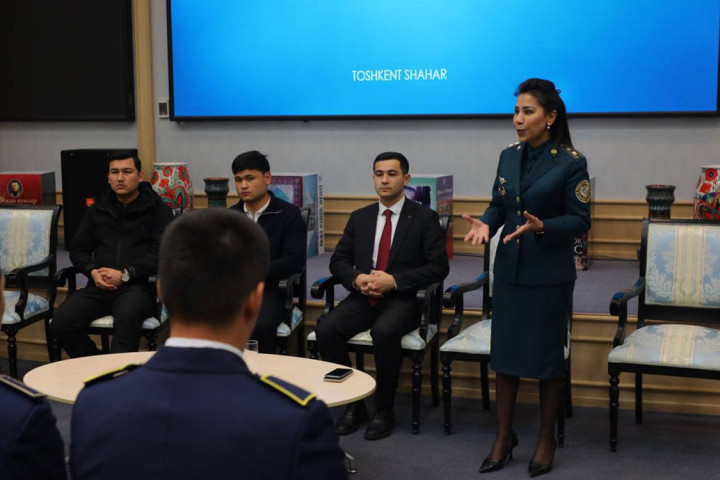
TUIT contributes to SDG 16 through education that prepares students to become responsible professionals and active citizens. Students are educated not only in technical fields, but also in rights, responsibilities, civic participation, academic integrity, and ethical behaviour. This is important because strong institutions depend on citizens and professionals who understand accountability, lawful conduct, respect for rules, and the public value of trustworthy systems.
 |
 |
The University maintains anti-corruption mechanisms through its dedicated “Komplaens-nazorat” compliance system. This anti-corruption monitoring unit provides a formal channel for reporting and addressing corruption-related concerns, with published contact information and reporting mechanisms. Such structures are important in higher education because they help protect fairness in academic processes, strengthen institutional accountability, and support trust among students, staff, applicants, and the wider public.
Anti-corruption awareness is also promoted among students. In February 2025, TUIT distributed “Stop Corruption” video content through its official communication channels, with the anti-corruption message receiving 3,455 reactions. This kind of communication helps reinforce the idea that corruption prevention is not only an administrative function, but also a shared institutional value. By making anti-corruption messaging visible to students, the University supports a culture of integrity and responsibility.
Merit-based access to education is another important part of SDG 16. TUIT operates through the national admissions system, with admission procedures, requirements, and criteria publicly communicated through official channels. Transparent admissions and scholarship systems help reduce unfairness, strengthen trust in higher education, and ensure that students can understand the rules by which educational opportunities are distributed.
Academic integrity is maintained through structured examination systems, administrative controls, and formal academic procedures. These mechanisms help protect the value of academic qualifications and ensure that student achievement is based on learning and performance. In the context of SDG 16, academic integrity is essential because universities are themselves institutions of public trust. If academic standards are fair and credible, graduates are better prepared to contribute responsibly to society.
TUIT also supports student well-being, non-discrimination, and a safer campus environment through smoke-free campus standards, welfare services, equal opportunity measures for women, counselling services, and student support systems. These activities contribute to SDG 16 because peaceful and strong institutions are built not only through formal rules, but also through everyday practices that protect dignity, inclusion, safety, and respect.
Community & Partnerships
TUIT’s SDG 16 contribution extends into community and national development through cooperation with ministries, public institutions, and technology-sector partners. The University works closely with the Ministry of Digital Technologies in areas such as student scholarships, digital governance programmes, competitions, professional development, and talent recognition. This partnership supports the development of skilled professionals needed for Uzbekistan’s digital public sector and strengthens the link between higher education and national institutional capacity.
https://t.me/tuituz_official/24428
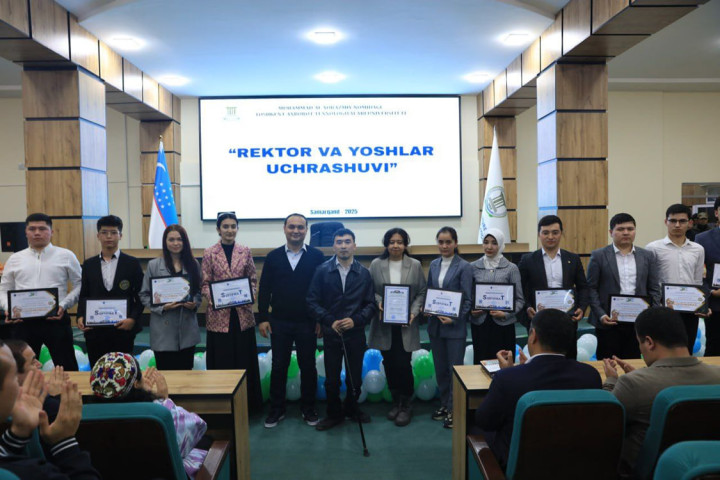
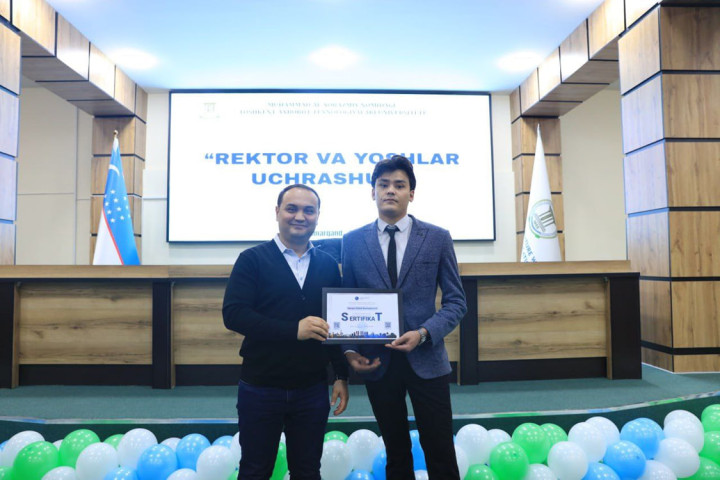
TUIT’s graduates also contribute to public administration and institutional development. One example in the institutional materials is TUIT graduate Turdimurodov Azizbek, who was appointed as Sirdaryo District Governor. This example illustrates how TUIT alumni may move into leadership and public-sector roles, contributing to governance, regional development, and institutional strengthening. While this is one individual case, it supports the broader point that the University’s graduates can serve not only in technical companies, but also in public institutions.
 |
 |
 |
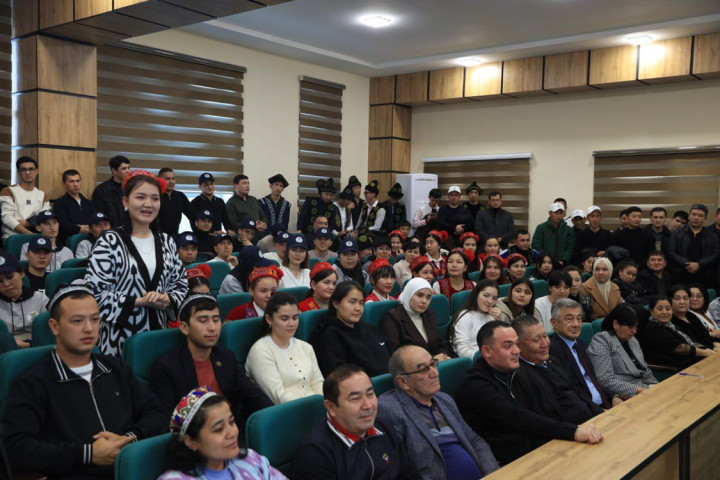 |
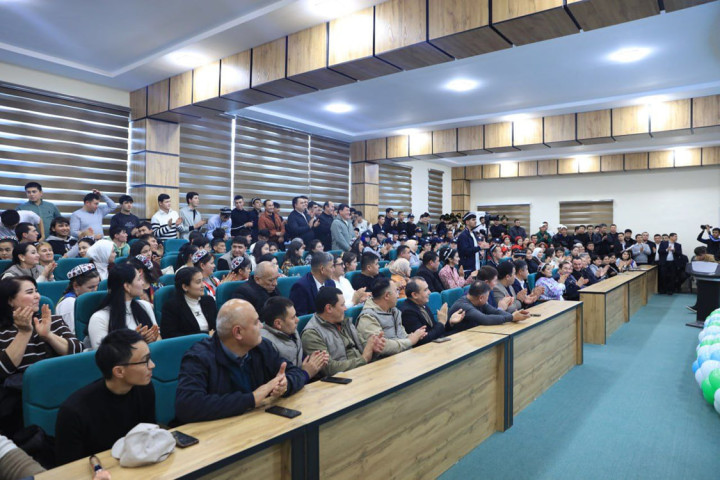
The University also aligned its activities with national security and institutional priorities. In February 2025, TUIT held an emergency rector-level meeting following national-level priorities connected with security and defence. This reflects the University’s role in responding to national institutional agendas, especially in areas where ICT, cybersecurity, telecommunications, and digital governance are strategically important.
Student welfare and fairness also connect TUIT to national social policy. From August 2025, student stipends were increased by 10% under a Presidential Decree, with TUIT students among the broader group of higher education beneficiaries across Uzbekistan. While this was a national policy rather than a TUIT-specific decision, it is relevant to SDG 16 because fair and predictable student support systems contribute to trust in public institutions and help protect students’ educational continuity.
https://t.me/tuituz_official/27012
TUIT’s participation in international rankings and public reporting also supports institutional transparency. Its inclusion in the THE Impact Rankings 2025 TOP 1000 and its preparation of SDG-related reporting demonstrate the University’s engagement with international quality benchmarking and accountability frameworks. Public reporting helps stakeholders understand how the University contributes to sustainable development and strengthens institutional trust through evidence-based communication.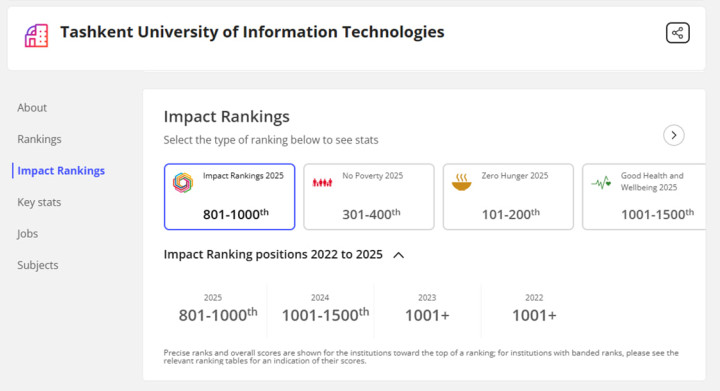
https://www.timeshighereducation.com/world-university-rankings/tashkent-state-technical-university
Key Results
|
Indicator |
Result |
|
Scopus articles (SDG 16) |
61 (2.6% of total) |
|
Ministry of Digital Technologies scholarship recipients |
32 students (+ 4 lyceum) |
|
Presidential State Scholarship recipients |
1+ (2024–2025 cycle) |
|
UzQuiz Championship |
1st place (TUIT) |
|
Anti-corruption compliance unit |
Active |
|
Graduate appointed as district governor |
1 (public record) |
|
Stipend increase (from Aug 2025) |
10% |
|
THE Impact Rankings 2025 |
TOP 1000 |
Overall, during the 2024–2025 academic year, TUIT contributed to SDG 16 through anti-corruption compliance, transparent admissions, academic integrity, student rights protection, civic education, cybersecurity education, digital governance research, scholarship-based merit recognition, and partnerships with public institutions. These activities show that TUIT supports peace, justice, and strong institutions both internally,
through accountable university governance, and externally, by preparing specialists who can strengthen secure, fair, and trusted digital institutions in Uzbekistan.